KYC in Rwanda: Individual Customer Verification in 2026
KYC in Rwanda 2026: individual customer verification, risk-based due diligence, operational challenges, and scalable digital onboarding solutions for financial institutions.
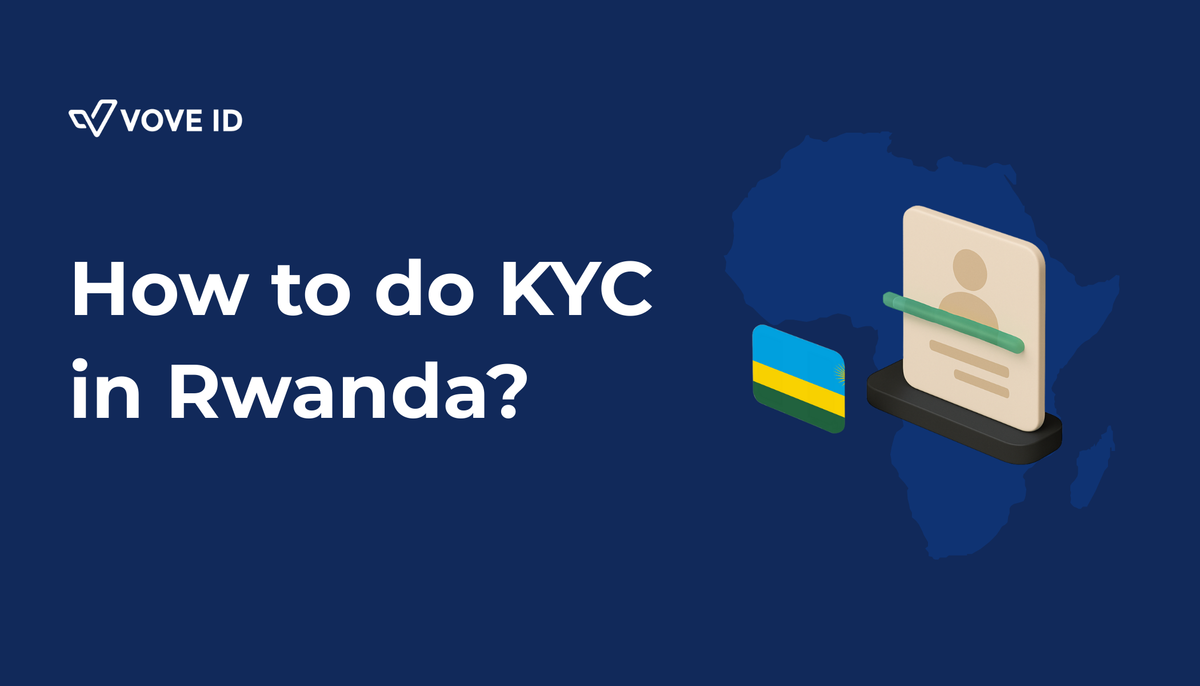
Rwanda is rapidly digitalising its financial ecosystem, but KYC compliance remains hands-on. Banks, fintechs, and payment providers must verify individual customers, apply risk-based due diligence, and maintain audit-ready records.
While Rwanda’s Single Digital ID (SDID) will eventually streamline onboarding, coverage is still partial: over 1.8 million have submitted biometric data as of late February 2026 (Parliament/NIDA reports), but full nationwide issuance of SDID is expected only by mid-2026. Most customers still require verification through national IDs, supplementary documents, and manual checks.
Digital onboarding platforms, such as VOVE ID, help institutions structure verification processes, standardise documentation, and maintain auditable verification trails, reducing manual review and improving regulatory defensibility.
Rwanda’s AML/CFT and KYC Framework
The regulatory framework combines legislation, supervisory guidance, and regional commitments:
- Law N° 001/2025 on the prevention and punishment of money laundering, terrorist financing and the financing of proliferation of weapons of mass destruction (abbreviated hereafter as Law N° 001/2025)
- National ML/TF Risk Assessment 2024 and implementing regulations
- Oversight by National Bank of Rwanda and Financial Intelligence Centre
- Membership in Eastern and Southern Africa Anti-Money Laundering Group
Regulators emphasise risk-based due diligence and demonstrable effectiveness. Collecting documents alone is insufficient — institutions must show how identities were verified, risks assessed, and records maintained.
Core KYC Requirements
1. Individual Identification
Institutions should collect and verify:
- Full name, date of birth, nationality
- Government-issued ID (national ID, passport, driver’s license)
- Residential address and contact information
- Occupation or source of funds for higher-risk accounts
Digital ID (SDID) can accelerate verification for enrolled individuals, but most customers still require traditional IDs and supplementary documents.
2. Verification Methods
Effective verification typically involves:
- Cross-checking IDs against NIDA databases
- Biometric verification via third-party providers, including facial recognition, fingerprints, and iris scans (as per NIDA biometric capture)
- Screening against sanctions lists, PEP databases, and adverse media
For individuals enrolled in SDID, API integration with NIDA for real-time verification is being piloted, which can streamline onboarding.
Institutions must document verification steps, providing audit-ready evidence for regulators.
3. Risk-Based Due Diligence
Rwanda follows a risk-based approach:
- Standard due diligence (SDD): for typical retail clients
- Enhanced due diligence (EDD): for high-risk clients (PEPs, foreign nationals, unusual transaction patterns)
- Ongoing monitoring: periodic review of customer information and risk profile
Risk assessments and rationale should be clearly recorded to satisfy supervisory expectations.
4. Operational Challenges
Even with digital tools, practical challenges persist:
- Partial SDID coverage (over 1.8 million have submitted biometric data as of late February 2026) → supplementary verification required
- Cross-border or foreign clients require additional IDs or verification sources
- Data quality issues (incomplete or outdated information) can delay onboarding
- Regulators expect evidence of effective verification, not just collected documents
Supervisory Expectations
Regulators increasingly emphasise effectiveness over formality. Key points:
- Clear documentation of verification steps
- Demonstrated risk-based segmentation of clients
- Ongoing monitoring and updates
- Audit-ready evidence of due diligence
FIC actively trains the sector — for example, in February 2026, 189 legal professionals attended a KYC/AML training. Supervisors focus on effectiveness of STR reporting and ongoing monitoring.
Scaling KYC
Digital onboarding platforms help institutions:
- Structure workflows consistently
- Standardise document collection and verification
- Maintain audit-ready records for compliance
- Reduce manual review and human error
Platforms such as VOVE ID provide scalable solutions while giving institutions flexibility and neutrality in vendor choice.
Conclusion
Rwanda’s digital ecosystem is rapidly improving KYC speed, but compliance remains hands-on. Financial institutions must:
- Verify identities thoroughly (combining SDID where available, national IDs, and supplementary documents)
- Apply risk-based due diligence
- Maintain structured, auditable records of verification
Digital tools help streamline processes, maintain audit trails, and ensure regulatory defensibility while scaling operations in 2026.
Onboarding individual clients in Rwanda? Book a demo of VOVE ID to see how structured KYC workflows simplify compliance while maintaining audit-ready records.
Frequently Asked Questions (FAQ)
1. What is the Single Digital ID (SDID) in Rwanda and how does it impact KYC?
The SDID is Rwanda’s nationwide biometric identity system. It enables faster customer onboarding by providing a verified digital identity. As of late February 2026, over 1.8 million people have submitted biometric data, but full SDID issuance is expected by mid-2026. Until then, verification still relies on national IDs and supplementary documents.
2. Can financial institutions integrate SDID verification into their onboarding workflows?
Yes. API integration with NIDA is being piloted for real-time verification of enrolled individuals. Platforms like ours can incorporate SDID checks into structured KYC workflows, reducing manual review while maintaining audit-ready records.
3. What documents are required for KYC in Rwanda for individuals?
Institutions typically collect: full name, date of birth, nationality, government-issued ID (passport, national ID, or driver’s license), residential address, and occupation/source of funds. Biometric verification (facial recognition, fingerprints, iris scans) can supplement traditional documentation for higher reliability.
4. How does Rwanda implement risk-based due diligence?
Rwanda follows a risk-based approach: Standard Due Diligence (SDD) for typical clients, Enhanced Due Diligence (EDD) for high-risk clients (PEPs, foreign nationals, unusual transactions), and ongoing monitoring. Institutions must clearly document assessments and rationale to meet regulatory expectations.
5. What are common challenges in KYC compliance in Rwanda?
Key challenges include partial SDID coverage, cross-border verification requirements, inconsistent data quality, and the need for demonstrable verification evidence. Platforms like VOVE ID help manage these challenges by structuring workflows and maintaining auditable records.
Sources
- NIDA – SDID updates
- FIC – AML/KYC guidance and training
- Rwanda Parliament – Feb 2026 hearings
- BiometricUpdate.com
- The New Times Rwanda
This article is published for informational purposes and does not constitute legal or regulatory advice.