Merchant Verification in Nigerian Marketplaces: A Practical Compliance Guide for 2026
Learn how Nigerian marketplaces verify merchants with BVN, CAC checks, AML screening, and fraud prevention. Automate onboarding with VOVE ID.
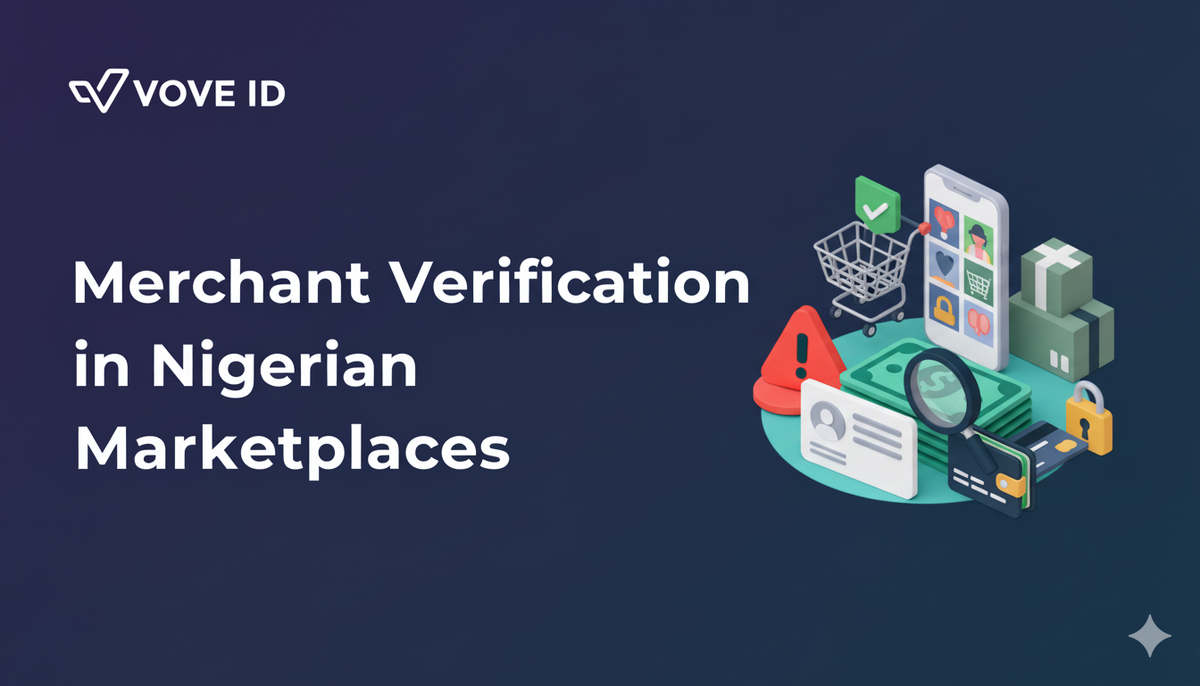
Nigeria has become one of Africa’s largest digital commerce markets. Marketplaces, fintech platforms, and payment service providers are onboarding thousands of new sellers every month. However, rapid growth also increases the risk of fraudulent merchants, synthetic identities, and shell companies entering digital platforms.
To operate responsibly and comply with financial regulations, platforms must implement structured merchant verification processes that combine identity checks, business verification, and ongoing monitoring. Solutions such as VOVE ID help automate these onboarding workflows while maintaining compliance with evolving regulatory expectations.

This guide explains how merchant verification works in Nigerian marketplaces, what regulators expect in 2026, and how platforms can structure a secure onboarding process.
Regulatory Context for Merchant Verification in Nigeria (2026 Update)
Merchant verification in Nigeria sits at the intersection of several regulatory frameworks governing financial services and anti-money laundering controls.
In 2026, the Central Bank of Nigeria (CBN) is actively tightening BVN rules:
- Limitations on phone number changes
- Watchlists for suspicious transactions
- Mandatory liveness checks for account opening or reactivation
The Nigerian Financial Intelligence Unit (NFIU) continues to supervise AML reporting, and these measures show that even marketplaces integrating PSPs or handling settlements are de-facto gatekeepers subject to obligations similar to KYC/KYB for financial institutions.
Several systems are commonly used during verification:
- BVN (Bank Verification Number) for identity validation
- Corporate records maintained by the Corporate Affairs Commission (CAC)
- AML screening against sanctions and watchlists
Although marketplaces may not always be licensed financial institutions, the combination of payment processing and settlement responsibilities effectively subjects them to KYC/KYB requirements.
More about KYC and KYB in Nigeria:
 Anastasiia
 Anastasiia
Merchant Verification Workflow in Nigerian Marketplaces
Most Nigerian marketplaces follow a structured onboarding workflow designed to reduce fraud and confirm the legitimacy of sellers. A typical process includes several steps.
1. Seller Registration
The process begins when a merchant creates an account and submits basic information:
- Full legal name
- Contact details
- Bank account information
- Business details (if applicable)
At this stage platforms collect initial data but do not yet allow full marketplace activity.
2. Identity Verification
Individual sellers must verify their identity using government-issued identification.
Common documents include:
- National ID card
- International passport
- Driver’s licence
Platforms often cross-check this information with the BVN system, which links Nigerian citizens to verified bank identities. VOVE ID can automate this step, ensuring faster verification and reducing manual errors.
3. Business Registration Checks
For corporate sellers, marketplaces must confirm that the business exists legally. Verification usually involves checking the company registration details through the Corporate Affairs Commission database.
Typical corporate documents include:
- Certificate of incorporation
- Company registration number
- Director information
- Registered address
At this stage many platforms also verify that the company bank account matches the registered business.
4. Beneficial Ownership Identification
To reduce fraud risks and comply with AML standards, platforms increasingly identify the ultimate beneficial owners (UBOs) of merchant businesses.
In 2026, many marketplaces are adopting combined KYB + UBO screening with real-time sanctions checks. This helps detect:
- Shell companies
- Nominee directors
- Hidden ownership structures
5. Sanctions and Risk Screening
Before activating a seller account, platforms typically perform AML screening against:
- Sanctions lists
- Politically exposed person (PEP) databases
- Fraud watchlists
Risk scoring may also consider:
- Geographic risk factors
- Unusual business activity
- Mismatched documents
Automation ensures consistency and faster review cycles.
6. Ongoing Monitoring
Merchant verification does not end after onboarding. Marketplaces monitor sellers continuously to detect:
- Suspicious transaction patterns
- Sudden volume spikes
- Unusual refund activity
These controls help prevent fraud schemes such as merchant account takeovers or payment laundering.
Typical Merchant Verification Documents
Individual merchants:
- Government ID
- Bank account linked to BVN
- Phone verification
Corporate merchants:
- Certificate of incorporation
- Company registration number
- Director identification
- Business bank account
Structured documentation collection ensures platforms can demonstrate compliance if regulators request onboarding records.
Common Fraud Risks in Nigerian Marketplaces
Nigeria’s digital commerce ecosystem is vibrant but also attracts fraud actors. Common risks include:
Fake Merchants
Fraudsters may create seller accounts using stolen or synthetic identities.
Shell Companies
Businesses registered with minimal activity can be used to process fraudulent transactions.
Account Takeovers
Compromised seller accounts may be used to process stolen payments.
Payment Laundering
Some merchants process transactions on behalf of other businesses to bypass compliance checks.
Structured verification workflows significantly reduce these risks.
Merchant Verification Checklist
Marketplaces operating in Nigeria should confirm their onboarding process includes:
✔ Government identity verification
✔ BVN validation for individual merchants
✔ Company registration check via CAC
✔ Director and beneficial owner identification
✔ AML sanctions and PEP screening
✔ Secure documentation storage
✔ Ongoing transaction monitoring
Automating these steps reduces operational costs and improves consistency across large onboarding volumes.
Why Automation Matters for Merchant Verification

Manual verification processes become difficult to scale when marketplaces onboard thousands of sellers. Automation helps platforms:
- Reduce onboarding delays
- Improve document verification accuracy
- Detect fraud patterns earlier
- Maintain structured compliance records
Solutions like VOVE ID enable platforms to integrate identity checks, corporate verification, and AML screening into a single automated workflow.
FAQ
Q1: What is merchant verification?
Merchant verification is the process of confirming the identity and legitimacy of sellers before allowing them to operate on a digital platform. It typically includes identity checks, company verification, and AML screening.
Q2: Is merchant verification mandatory in Nigeria?
While marketplaces are not always directly regulated, platforms processing payments or integrating with licensed PSPs must follow AML and identity verification practices aligned with Nigerian regulations.
Q3: What documents are required for merchant onboarding?
Individual sellers usually submit government ID and bank details linked to BVN. Corporate merchants typically provide incorporation documents, director IDs, and company registration numbers.
Q4: How long does merchant verification take?
Depending on the platform and verification process, onboarding can take from a few minutes (automated) to several days (manual review).
Q5: Can marketplaces automate merchant verification?
Yes. Platforms can verify identity documents, check company registries, and screen merchants against sanctions databases in a single workflow using tools like VOVE ID.
Conclusion
As Nigeria’s digital commerce ecosystem continues to expand, merchant verification is a critical safeguard for marketplaces and fintech platforms. Structured onboarding workflows help prevent fraud, improve trust, and ensure compliance with financial regulations.
Want to accelerate onboarding and reduce fraud without compromising compliance?