How API-Driven Identity Verification Is Transforming African Fintech
Explore how API-driven identity verification strengthens risk-based onboarding, regulatory alignment, and cross-border scalability for African fintech institutions.
Fintech growth across African markets continues to accelerate. Digital wallets, lending platforms, payment service providers, and cross-border financial products are expanding into new jurisdictions and customer segments. At the same time, supervisory scrutiny around KYC and AML controls is becoming more structured and outcome-focused.
Regulators increasingly assess not only whether written policies exist, but whether institutions can demonstrate consistent application of customer due diligence, clear risk classification logic, and traceable onboarding decisions.
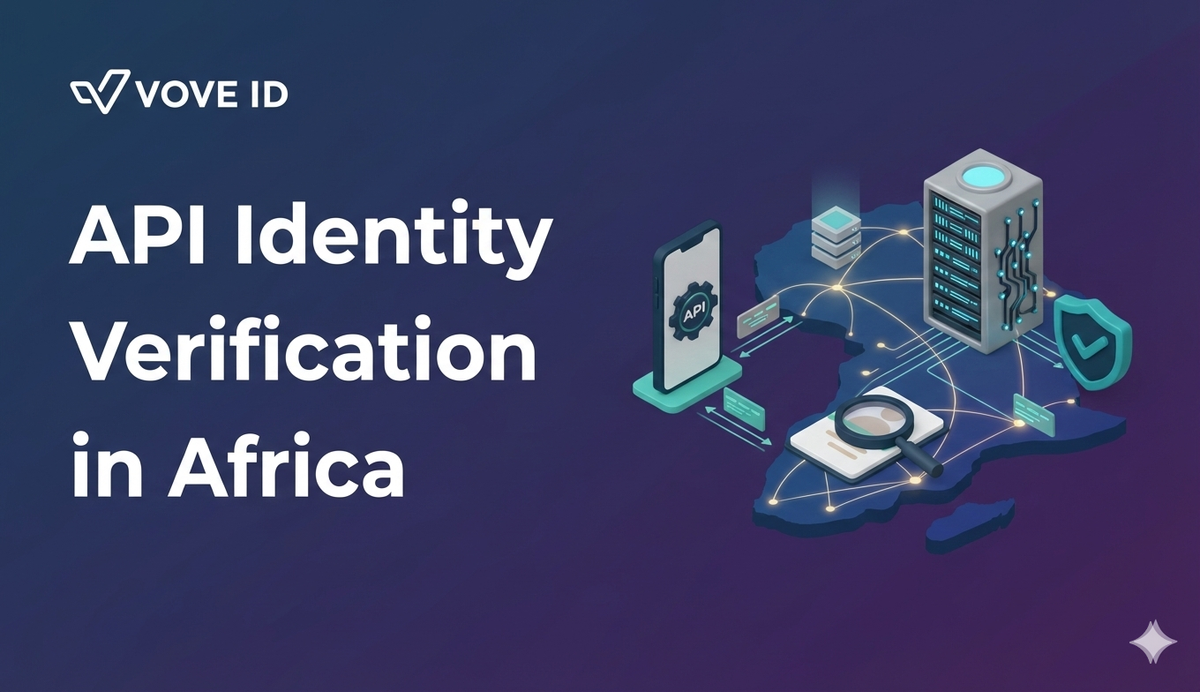
API-driven identity verification has emerged as a practical response to this environment. Solutions such as VOVE ID enable fintech companies to integrate identity verification directly into their onboarding architecture, embedding structured compliance controls into product design from the outset.
This shift is not purely technical. It directly affects how fintech institutions scale, expand regionally, and withstand regulatory inspection.
Fragmented Identity Infrastructure and Regulatory Diversity
African markets are not uniform in terms of identity infrastructure or regulatory interpretation.
Across jurisdictions, institutions encounter differences in:
- National ID system maturity
- Accessibility of government registries
- Accepted identity document types
- Supervisory expectations around KYC depth
- Data retention and reporting requirements
Some countries operate biometric national ID systems with structured database access. Others rely primarily on document-based verification combined with internal controls. In several markets, the legal framework may be harmonised at a regional level, but supervisory practice still varies at the national level.
For fintech companies expanding across regions such as ECOWAS, the East African Community, or SADC, onboarding processes must adapt to this diversity. A rigid verification model designed for one jurisdiction may not satisfy regulators in another.
Without modular architecture, institutions often resort to manual adjustments, duplicated workflows, or inconsistent due diligence standards.
From Manual Controls to Structured API Integration
Historically, many fintech onboarding processes relied on manual document review, fragmented vendor integrations, or custom-built scripts designed for a single market.
API-driven identity verification replaces these fragmented controls with structured system-level integration.
In practice, this allows fintech platforms to:
- Trigger document verification in real time
- Perform biometric face matching
- Validate structured identity data inputs
- Apply sanctions and watchlist screening
- Generate time-stamped verification logs
Identity verification becomes a defined component of system architecture rather than an operational afterthought.
VOVE ID provides API-based identity verification designed to integrate directly into digital onboarding workflows. Institutions can configure verification logic according to their documented risk-based approach instead of applying uniform or overly rigid checks across all customer segments.
Supporting a Risk-Based Compliance Model
Across African AML frameworks, the risk-based approach remains central. Institutions are expected to:
- Classify customers according to risk
- Apply enhanced due diligence where appropriate
- Maintain clear escalation procedures
- Demonstrate consistent application of onboarding controls
API-driven verification supports this model by enabling configurable and traceable decision logic.
For example, institutions can:
- Apply additional verification layers to higher-risk customer categories
- Adjust document requirements by jurisdiction
- Define structured escalation pathways for failed biometric checks
- Retain detailed audit trails for supervisory review
This reduces reliance on informal decision-making and strengthens governance transparency during inspections.
Operational Impact: What Changes in Practice
The measurable impact of API-driven identity verification depends on how onboarding was structured before implementation.
Where institutions previously relied heavily on manual document review, structured API-based verification can materially reduce routine compliance workload. Automated document validation and biometric checks shift routine files out of manual queues, allowing compliance teams to focus on higher-risk or escalated cases.
Where onboarding required delayed back-office validation, real-time API responses may significantly shorten time-to-activation. Customers receive structured feedback during the onboarding process instead of waiting for internal review cycles.
Drop-off rates are also closely linked to friction in identity capture flows. When document validation and biometric checks are integrated seamlessly and provide immediate feedback, institutions may observe improved completion rates compared to fragmented, multi-step manual processes.
The extent of improvement depends on:
- Jurisdiction-specific requirements
- Network conditions
- Customer risk distribution
- Document diversity
- Internal escalation thresholds
However, structured API integration consistently shifts onboarding from reactive manual control toward rule-based automation.
Enabling Cross-Border Expansion
Many African fintech companies operate or plan to operate across multiple jurisdictions. Cross-border expansion introduces regulatory variability that affects onboarding design.
Differences may include:
- Acceptable identity documents
- Age thresholds and onboarding eligibility
- Data storage requirements
- Reporting and record-keeping obligations
A modular API-based architecture allows fintech institutions to configure onboarding rules per jurisdiction without rebuilding their entire verification stack.
Centralised orchestration combined with locally configurable verification modules supports both regulatory alignment and operational consistency.
Additional Operational Considerations in African Markets
Implementation in African fintech ecosystems must also account for infrastructure and commercial realities.
Network Latency and Connectivity Constraints
In regions with unstable or low-bandwidth internet connectivity, real-time API calls for document upload or biometric verification may experience delays.
If not properly managed, latency can increase onboarding abandonment rather than reduce it.
Institutions should implement:
- Image compression and optimisation prior to transmission
- Clear user messaging during processing
- Retry logic and timeout management
- Structured fallback pathways where necessary
Verification architecture must be designed with connectivity variability in mind.
Cost Sensitivity in Low-ARPU Environments
Many fintech models operate in markets with relatively low average revenue per user. API-based verification typically introduces per-session or per-check costs.
If high verification depth is applied uniformly across all customer categories, onboarding costs may exceed sustainable unit economics.
A properly calibrated risk-based approach becomes commercially as well as regulatorily necessary. Higher-risk customers may require enhanced verification layers, while lower-risk segments can be onboarded using proportionate controls.
Cost modelling should therefore be integrated into compliance architecture decisions.
Language and Localisation Complexity
African markets are linguistically diverse. Identity capture flows may need to support:
- English
- French
- Arabic
- Portuguese
- Local languages
Poor localisation can increase input errors, failed document submissions, and biometric mismatches.
Verification systems must therefore account not only for regulatory diversity, but also for user interface adaptation and linguistic clarity.
Implementation Risks to Avoid
API integration alone does not guarantee compliance alignment. Common risks include:
- Misalignment between verification configuration and internal risk assessments
- Insufficient validation of local regulatory requirements
- Weak exception handling processes
- Incomplete audit logging due to data mapping errors
Successful implementation requires coordination between compliance, product, and engineering teams. Verification depth, escalation rules, and record retention logic should reflect documented AML policies and supervisory expectations.
Conclusion
African fintech institutions operate within diverse regulatory and identity infrastructures. Sustainable growth depends not only on user acquisition, but on consistent compliance execution and governance transparency.
API-driven identity verification enables institutions to embed structured customer due diligence directly into onboarding architecture. When properly configured, it supports a risk-based approach, improves audit readiness, and facilitates cross-border scalability.
By integrating API-based identity verification solutions such as VOVE ID, fintech companies can align onboarding processes with supervisory expectations while maintaining operational flexibility across markets.
Expanding across African markets requires structured and adaptable onboarding. Book a demo with VOVE ID to see how API-based identity verification can support compliance alignment and scalable growth.