The Impact of AI on AML Compliance in Africa
Explore how AI is transforming AML compliance in Africa. Learn how fintechs and regulated businesses can leverage AI-powered monitoring and digital identity verification solutions like VOVE ID to enhance risk detection, reduce false positives, and strengthen regulatory compliance.
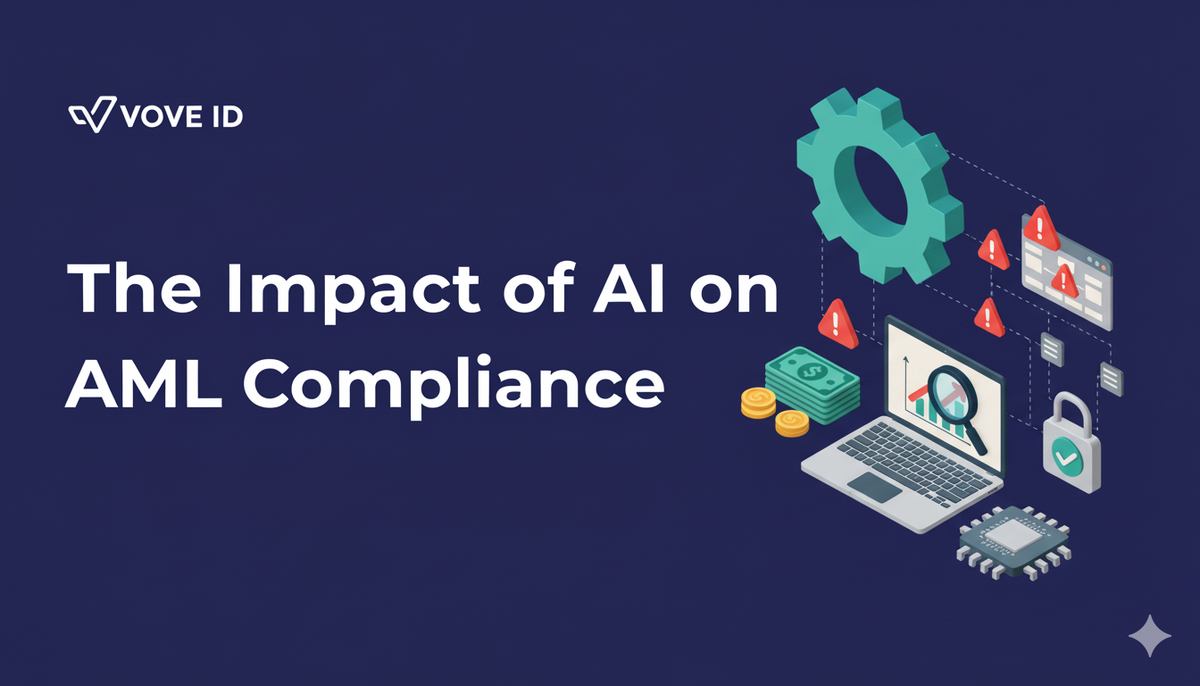
As financial services across Africa continue to digitize, Anti-Money Laundering (AML) compliance is becoming increasingly complex and data-driven. The rapid growth of mobile money, digital wallets, cross-border payments and fintech platforms has significantly expanded transaction volumes and customer bases, creating new opportunities for financial inclusion, but also new risks related to financial crime.
To manage these risks, financial institutions and fintechs are turning to artificial intelligence to enhance their AML capabilities. However, AI-driven AML systems are only as effective as the quality of the data they rely on. This is why strong digital identity and compliance foundations, supported by solutions such as VOVE ID, are becoming an essential part of modern AML strategies in Africa.
Why Traditional AML Systems Struggle
Many AML programs across the continent still rely on rule-based transaction monitoring systems. These systems flag transactions based on predefined thresholds and static rules, which often leads to two major issues.
First, they generate a high number of false positives. Compliance teams spend significant time reviewing alerts that do not represent real risk, slowing down investigations and increasing operational costs. Second, static rules struggle to detect complex or evolving money-laundering patterns, especially in fast-moving digital environments.
As African financial ecosystems scale and diversify, these limitations make traditional AML approaches increasingly unsustainable.
How AI Is Transforming AML Compliance
Artificial intelligence introduces a more dynamic and adaptive approach to AML compliance. By analyzing large volumes of transactional and customer data, AI systems can identify patterns, anomalies and behavioral changes that would be difficult to detect manually or through rule-based logic.
Key ways AI is transforming AML include:
- Advanced transaction monitoring, where machine learning models learn from historical data to distinguish normal customer behavior from suspicious activity.
- Reduction of false positives, allowing compliance teams to focus on genuinely high-risk cases rather than reviewing thousands of low-value alerts.
- Real-time risk scoring, enabling institutions to assess transactions and customers dynamically as activity occurs.
- Behavioral analysis, where AI tracks changes in customer behavior over time, helping detect account takeovers, mule activity or layered laundering schemes.
For African markets experiencing rapid digital adoption, these capabilities are particularly valuable.
The Role of Data, KYC and Digital Identity
AI alone cannot solve AML challenges without reliable data. In many African countries, fragmented identity systems, manual onboarding processes and inconsistent customer records limit the effectiveness of even the most advanced analytics.
Strong Know Your Customer (KYC) and Customer Due Diligence (CDD) processes are the foundation of any AI-enabled AML framework. Verified identities, structured customer profiles and accurate risk categorization significantly improve the quality of downstream monitoring and analysis.
This is where digital identity and compliance platforms such as VOVE ID add tangible value. By enabling reliable identity verification, risk-based onboarding and consistent customer data collection across markets, these solutions help create cleaner, more trustworthy datasets that AI-powered AML systems can actually work with.
In practice, better onboarding leads to better monitoring, fewer blind spots and more defensible compliance decisions.
AI Adoption Across African Markets
AI adoption for AML is progressing at different speeds across the continent. Markets with more mature regulatory frameworks and higher fintech density, such as Nigeria, Kenya, South Africa and parts of East Africa, are often early adopters.
Fintech companies, digital banks and mobile money operators are leading this shift, driven by the need to scale compliance operations without scaling headcount at the same pace. AI allows these businesses to manage risk more efficiently while continuing to grow.
However, adoption is not without challenges. Smaller institutions may face constraints related to infrastructure, data quality, cost and access to specialized talent. These realities mean that AI implementation must be gradual, targeted and aligned with business and regulatory priorities.
Regulatory Expectations and Practical Constraints
Regulators across Africa generally support innovation that strengthens AML outcomes, but they also expect transparency, accountability and explainability. AI systems used for compliance must be auditable and understandable, particularly when they influence regulatory reporting or customer treatment.
Key considerations include:
- Explainability, ensuring that AI-driven decisions can be justified to regulators.
- Bias management, avoiding models that unfairly classify customers based on incomplete or skewed data.
- Governance frameworks, clearly defining how AI models are developed, tested, monitored and updated.
As a result, many institutions adopt hybrid approaches, combining rule-based controls with AI insights to balance innovation and regulatory comfort.
Practical Steps for Compliance Teams
For organizations considering AI in their AML programs, a few practical steps can help ensure successful adoption:
- Start with clear objectives, such as reducing false positives or improving detection accuracy.
- Invest in data quality, particularly at the onboarding and identity verification stage.
- Integrate AI gradually into existing AML workflows rather than replacing systems overnight.
- Engage early with regulators to align expectations and demonstrate control over AI models.
Upgrading KYC and onboarding processes is often one of the most effective first steps, as it directly improves the data feeding AI-based monitoring tools.
Conclusion
Artificial intelligence is reshaping AML compliance in Africa by enabling smarter detection, faster response times and more efficient use of compliance resources. While AI is not a standalone solution, it plays a critical role when combined with strong data foundations, effective governance and modern digital onboarding.
For fintechs and regulated businesses operating in African markets, aligning AI-driven AML monitoring with robust identity verification solutions such as VOVE ID represents a practical and forward-looking approach to compliance. This combination supports stronger risk management while allowing businesses to scale confidently in an increasingly digital financial landscape.
Ready to strengthen your AML compliance with AI-powered monitoring and reliable identity verification? Discover how VOVE ID can help your fintech or regulated business build a strong compliance foundation and scale safely across African markets.