Unlocking Business Trust with KYB in Kenya
Master KYB in Kenya with VOVE ID’s eKYB workflows. Verify business partners and support compliance with POCAMLA requirements in Kenya’s fintech ecosystem.
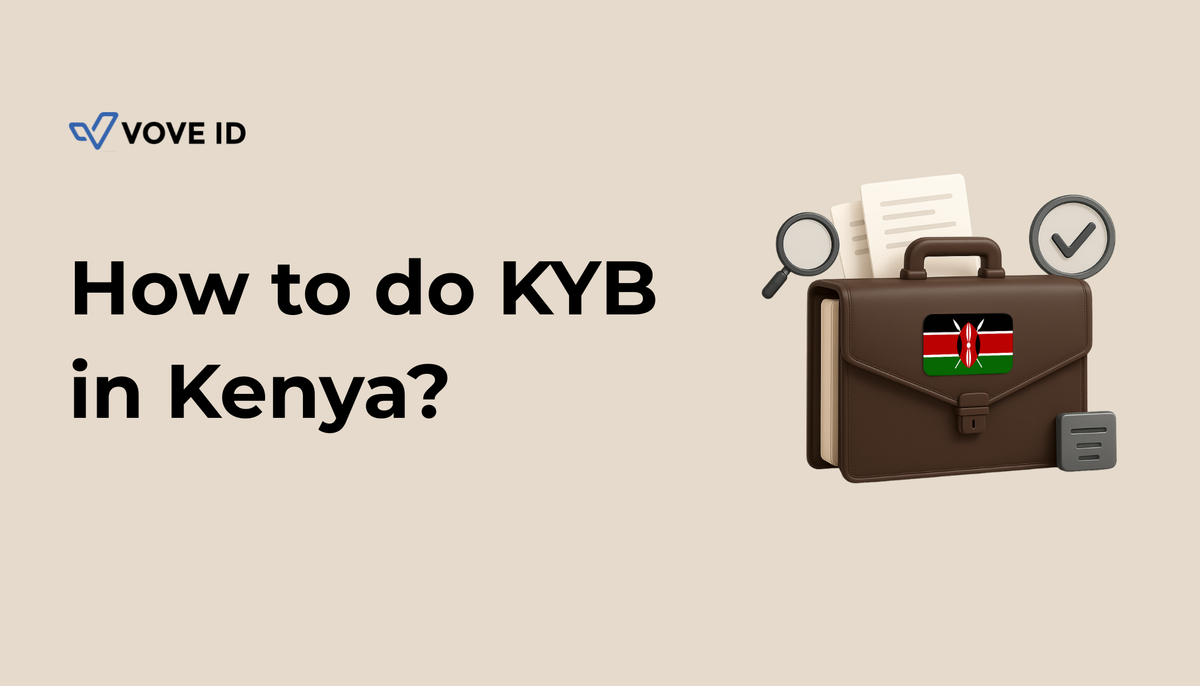
Kenya is one of East Africa’s most active financial ecosystems, driven by mobile money adoption, regional trade flows, and a rapidly expanding fintech sector. Nairobi continues to function as a major innovation hub, while cross-border commerce increases the need for reliable business verification and risk control.
As KYB requirements mature across regulated sectors, companies operating in Kenya are expected to verify corporate entities, identify beneficial ownership structures, and maintain ongoing compliance with AML obligations.
KYB focuses on verifying business entities and ownership structures, while AML monitoring covers ongoing transaction behavior and risk signals.
For a broader overview of KYB frameworks, see the KYB compliance guide. In practice, VOVE ID is used by fintech and regulated institutions to automate KYB workflows, including business verification and ownership screening.
Kenya KYB Challenges
Limited visibility into SMEs
Many small and informal businesses operate without complete digital records or consistent registration data.
Fraud and shell entities
Outdated filings or incomplete disclosures can obscure true ownership structures.
Operational burden
Manual verification processes increase onboarding time and compliance workload.
How KYB Works in Kenya
1. Verify Business Registration
Confirm company details via the Business Registration Service (BRS) to validate legal existence and entity type.
2. Check Tax Compliance
Use Kenya Revenue Authority (KRA) records to verify tax identification and detect inconsistencies.
3. Identify Beneficial Owners (UBOs)
Review shareholder records, director filings, and ownership structures to determine ultimate control.
4. Conduct Risk Screening
Screen entities and associated individuals against relevant sanctions, PEP lists, and adverse media sources.
5. Maintain Ongoing Monitoring
Update company data regularly to reflect ownership changes and regulatory updates.
Regulatory Framework
KYB in Kenya is governed by the Central Bank of Kenya (CBK) and the Financial Reporting Centre (FRC) under the Proceeds of Crime and Anti-Money Laundering Act (POCAMLA).
These requirements focus on:
- accurate identification of business entities
- transparency of beneficial ownership
- ongoing transaction monitoring and risk assessment
Practical KYB Practices
- Automate verification processes where possible to reduce manual workload
- Maintain structured records for regulatory audits under the Data Protection Act 2019
- Apply risk-based categorization for different business types
- Conduct periodic reviews of ownership and compliance data
- Ensure alignment between onboarding and AML monitoring systems
Conclusion
KYB in Kenya is a foundational requirement for operating safely in a mobile-first and fast-growing financial environment. Structured verification processes reduce fraud risk and improve trust between businesses and financial institutions.
VOVE ID supports KYB automation by enabling document verification, business registry checks, and ownership screening within a unified workflow.
See how VOVE ID supports KYB automation workflows in practice.
This article is intended for general informational purposes only and does not constitute legal, financial, or regulatory advice. KYB requirements may vary depending on jurisdiction, industry, and specific business circumstances. For up-to-date and binding compliance obligations, readers should refer to the relevant regulatory authorities or consult qualified professionals.