AML Compliance for BNPL Platforms: The 2026 Regulatory Playbook
BNPL platforms in 2026 require end-to-end AML controls including KYC, KYB, sanctions screening, and transaction monitoring. Learn key requirements, regulatory expectations, and common compliance gaps in modern BNPL workflows.
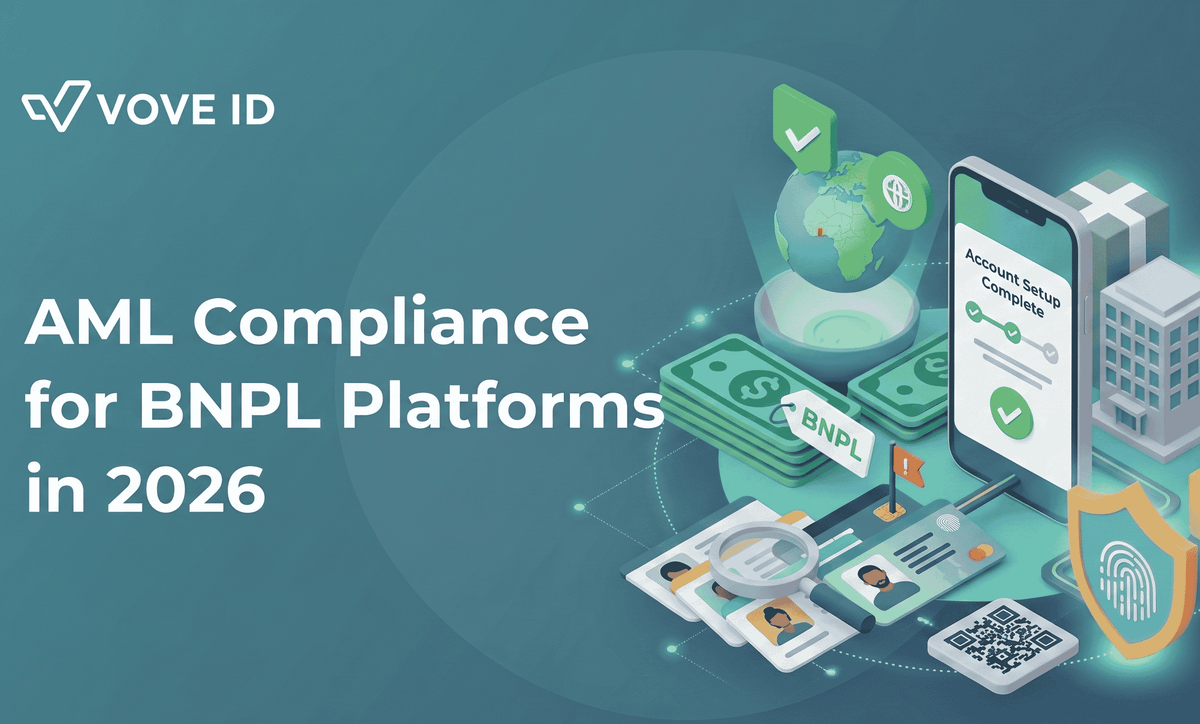
What AML Compliance Does a BNPL Platform Actually Need in 2026?
BNPL platforms need more than smooth checkout UX. They require solid KYC at onboarding, risk-based screening, transaction monitoring, suspicious activity escalation, and clear controls across merchant, customer, and repayment flows.
A BNPL platform needs customer identification at onboarding, sanctions and PEP screening, risk-based due diligence, transaction monitoring, suspicious activity escalation, and governance strong enough to support reporting and audits. The exact requirements depend on the market and licence, but the core control stack remains largely the same.
Many BNPL founders still see compliance mainly as a lending disclosure and affordability issue. That view is incomplete. AML risk lives inside the same workflows as checkout, merchant onboarding, customer approval, repayment behaviour, and fraud controls. A platform that can underwrite credit in seconds but cannot clearly explain who it onboarded, what risk signals it observed, and why it approved a transaction is building speed on top of a regulatory gap.
This is exactly where BNPL compliance often breaks down in practice.
Why BNPL is under heavier AML scrutiny in 2026
To the customer, BNPL feels like simple deferred payments. To regulators, it is a multi-party credit and payments ecosystem. Funds move between the consumer, the merchant, the BNPL provider, and often a funding or settlement partner. This creates several simultaneous AML questions:
- Who is the customer and how thoroughly was their identity verified?
- Is the merchant legitimate and properly screened?
- Are repeat purchases, refunds, split payments, or repayment patterns masking unusual behaviour?
- Can the platform demonstrate how risk decisions, alerts, and exceptions were handled?
In the UK, the direction is now clear. The FCA will bring Deferred Payment Credit (BNPL) under full regulation on 15 July 2026. This introduces proportionate affordability checks and Consumer Duty expectations, making weak AML controls much harder to defend.
In other markets such as Nigeria, Malaysia, and across the EU, BNPL platforms typically fall under broader lending, payments, or fintech licensing regimes. Supervisors expect a proper risk-based AML/CFT framework rather than treating digital credit as a special exception.
The AML obligations every BNPL platform should expect
While legal labels differ by jurisdiction, the practical requirements are consistent:
1. KYC at origination
Every BNPL relationship begins with customer onboarding. Weak identity verification at the start makes every later step — repayments, chargebacks, refunds, and collections — more risky and harder to defend.
This usually includes:
- Collecting core identity data before credit is activated
- Verifying the person behind the document or device
- Sanctions and PEP screening
- Assigning an initial risk rating based on geography, channel, merchant category, and behaviour
The goal is not to slow down onboarding, but to make it defensible.
2. Risk-based due diligence
Not all customers carry the same risk. A small repeat domestic purchase is very different from high-value cross-border spending, frequent failed onboarding attempts, or unusual repayment sources.
The FATF risk-based approach applies directly here. Controls should scale with actual risk — simplified due diligence for low-risk cases is acceptable, but higher-risk ones require enhanced review and stronger evidence.
3. Transaction monitoring
Many BNPL teams underestimate this because they focus heavily on origination. However, AML risk continues long after the loan is approved.
Monitoring should flag patterns such as:
- Repeated purchases just below thresholds
- Suspicious refund loops
- Rapid cycling across multiple merchants
- Unusual repayment velocity or sources
- Merchant behaviour suggesting collusion or mule accounts
Without ongoing monitoring, the platform becomes blind after onboarding.
4. Merchant and partner controls
BNPL is both a customer-risk and merchant-risk business. Weak merchant onboarding can turn an otherwise clean product into a laundering channel. Proper KYB, beneficial ownership checks, and sanctions screening on merchants are often required.
5. Case management, escalation, and reporting
Alerts mean nothing without a proper decision trail. Platforms need a clear workflow for reviewing suspicious activity, documenting rationale, escalating cases, and filing reports to the relevant FIU when necessary.
What usually goes wrong
The most common failure is not complete non-compliance, but fragmented compliance. Typical issues include:
- Strong KYC at onboarding but no monitoring of repayments and refunds
- Merchant review living in a completely separate system
- Sanctions screening done only once at signup
- No unified case history for suspicious activity decisions
The result is the illusion of control. Fraud losses increase, suspicious patterns are spotted late, and compliance teams struggle to explain decisions during audits or regulatory reviews.
A realistic BNPL AML workflow in 2026
| Stage | AML Control | Why it matters |
|---|---|---|
| Customer onboarding | KYC, document verification, liveness, sanctions/PEP screening | Establishes who is receiving credit |
| Merchant onboarding | KYB, beneficial ownership, sanctions screening | Prevents risky merchants entering the network |
| Approval decision | Risk scoring and policy rules | Separates low-risk from high-risk applications |
| Transaction lifecycle | Monitoring of purchases, refunds, repayments | Detects suspicious behaviour after origination |
| Alert handling | Case management and analyst review | Creates evidence for escalation and decisions |
| Reporting & governance | Audit trail, reporting, oversight | Supports regulatory review and formal obligations |
This connected approach is the difference between “having AML checks” and actually being able to operate safely under regulatory pressure.
How VOVE ID helps BNPL teams
VOVE ID helps BNPL and digital lending platforms connect onboarding, screening, and monitoring into one operational workflow. This includes:
- Identity verification and liveness for customers
- Sanctions, PEP, and adverse media screening
- Merchant KYB and verification
- Transaction monitoring and intelligent alerting
- Full audit-friendly case history and evidence trails
For early-stage and growth BNPL teams, this is particularly valuable because compliance requirements often appear before a large internal compliance team is in place. The system is designed to scale with transaction volume, merchant network growth, and new market expansion.
Practical checklist for BNPL founders
Before launch or expansion, make sure your team can clearly answer:
- What licence and regulatory framework governs BNPL in each target market?
- At what exact point is customer identity verified and credit activated?
- Which merchants require full KYB or enhanced due diligence?
- What triggers re-screening for sanctions or PEP?
- How are refunds, split payments, and repayment anomalies monitored?
- Where and how are suspicious activity decisions documented?
- What is the escalation path to filing a suspicious activity report?
If the answers rely on disconnected tools and manual handoffs between teams, the compliance model is weaker than it appears.
Conclusion
BNPL compliance in 2026 is not just about disclosures, affordability checks, or checkout experience. It is about whether the platform can properly identify customers, assess merchant risk, monitor ongoing behaviour, and defend its decisions with clear evidence.
The strongest BNPL companies treat AML as core product infrastructure. The ones that fall behind treat it as a paperwork exercise.
Want to see how VOVE ID can help your BNPL platform run KYC, KYB, sanctions screening, and transaction monitoring in one clean, audit-ready workflow? Talk to the team.
FAQ
- Is BNPL automatically subject to the same AML rules in every country?
No. Obligations depend on local laws and the firm’s licence. However, BNPL rarely escapes AML requirements because it operates within lending and payments ecosystems. - Does BNPL need transaction monitoring or only KYC?
It needs both. KYC addresses onboarding risk, while transaction monitoring catches suspicious patterns in repayments, refunds, and merchant behaviour after the relationship begins. - Why does merchant verification matter for BNPL?
Risky or collusive merchants can generate suspicious transaction flows that appear as normal consumer activity. Strong merchant KYB is a key part of the control framework. - What changed for BNPL in the UK?
The FCA will regulate Deferred Payment Credit (BNPL) from 15 July 2026, bringing clearer consumer protection and supervision requirements. - Can a BNPL startup automate most of its AML compliance?
Yes. Much of the process (identity verification, screening, monitoring, and alert routing) can be automated, but higher-risk cases still require human review and clear escalation ownership.
Sources
- FCA – Regulating Buy Now Pay Later (updated 2 April 2026)
- FCA – New protections confirmed for Buy Now Pay Later borrowers (11 February 2026)
- FATF – Risk-Based Approach for the Banking Sector