AML Compliance in Kenya: 2026 Guide for Fintechs and Regulated Businesses
Navigate Kenya’s 2025 AML regulations with this comprehensive guide. Discover POCAMLA, the 2023 AML/CTF Amendment Act, FATF grey-listing, and how VOVE ID’s solutions empower fintechs, digital wallets, BNPL, and crypto platforms to stay compliant.
Kenya’s AML Landscape: Why It Matters
Kenya’s financial sector is a global leader in digital payments, with mobile money platforms like M-Pesa driving the majority of transactions. This scale creates efficiency — but also exposure to financial crime risks, including money laundering, fraud, and terrorist financing.
In this environment, Anti-Money Laundering (AML) is not an onboarding requirement, but an operational system designed to monitor financial behavior, detect suspicious activity, and support regulatory reporting obligations.
VOVE ID supports regulated businesses by providing structured identity inputs and monitoring infrastructure that strengthen AML systems without disrupting user experience.
👉 AML controls are typically implemented within a structured AML compliance operating model for transaction monitoring and financial crime detection, enabling institutions to detect anomalies and respond in real time.
 Anastasiia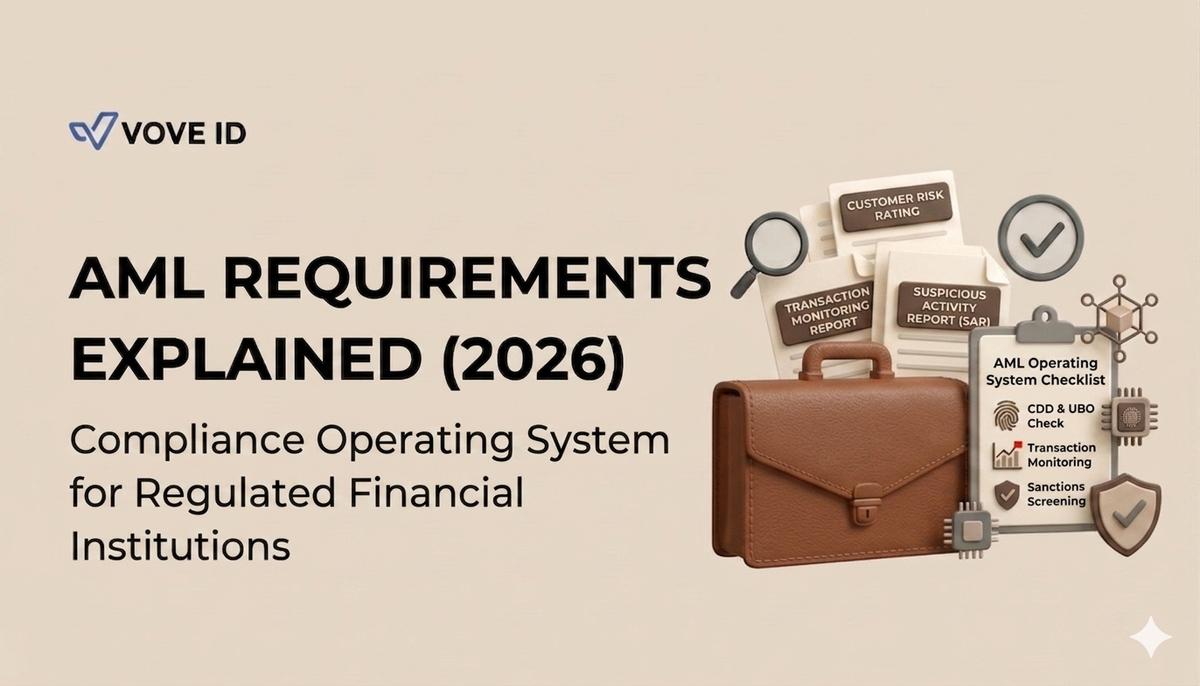
Regulatory Framework for AML in Kenya
Core Legislation: POCAMLA and Its Evolution
The Proceeds of Crime and Anti-Money Laundering Act (POCAMLA), 2009, forms the foundation of Kenya’s AML regime. It defines money laundering offenses, establishes reporting obligations, and mandates compliance programs for regulated entities.
The 2023 Amendment Act introduced key updates:
- Expanded beneficial ownership transparency requirements
- Broader scope covering DNFBPs (real estate, precious metals, accountants)
- Stronger coordination between regulators and enforcement bodies
- Increased penalties for non-compliance
Key Regulators and Enforcement Bodies
Kenya’s AML enforcement framework includes:
- Financial Reporting Centre (FRC) – Financial intelligence unit responsible for STR analysis
- Central Bank of Kenya (CBK) – Supervises financial institutions and payment providers
- Capital Markets Authority (CMA) – Oversees securities and investment firms
- Insurance Regulatory Authority (IRA) – Monitors insurance sector compliance
- Enforcement bodies (ARA, DCI, ODPP) – Investigation and prosecution
Coordination between these entities has intensified, particularly under FATF pressure.
FATF Grey List Status and Its Impact
As of 2025, Kenya remains under increased monitoring by FATF due to gaps in:
- beneficial ownership transparency
- enforcement consistency
- high-risk sector supervision
This leads to:
- stricter due diligence expectations from international partners
- increased audits and inspections
- higher compliance costs for cross-border fintech operations
Core AML Compliance Obligations
1. Customer Due Diligence (CDD as Input Layer)
Regulated entities must:
- rely on verified identity data collected during onboarding
- confirm beneficial ownership structures
- apply enhanced due diligence (EDD) for high-risk relationships
👉 CDD depends on upstream KYC processes but is used in AML as a risk context input, not as identity verification itself.
2. Transaction Monitoring (Core AML Layer)
This is the central AML function:
- detect unusual transaction patterns
- identify structuring (smurfing)
- flag cross-border anomalies
- track behavioral deviations over time
Modern systems rely on:
- rule-based engines
- machine learning anomaly detection
- real-time alerts and case generation
3. Suspicious Transaction Reporting (STRs)
Businesses must report suspicious activity to the FRC within required timelines.
Trigger scenarios include:
- inconsistent transaction patterns
- unexplained fund flows
- suspicious cross-border movements
Failure to report can result in regulatory penalties and enforcement action.
4. Record Keeping and Auditability
- retain transaction and compliance records for at least 7 years
- maintain audit trails for regulatory review
- ensure data accessibility for inspections
5. Internal Controls and Governance
- appoint a Money Laundering Reporting Officer (MLRO)
- implement internal AML policies
- conduct regular audits and compliance reviews
Challenges for Fintechs and Digital Businesses
Kenya’s fintech ecosystem faces specific AML challenges:
Regulatory Complexity
Evolving requirements under POCAMLA and FATF create compliance pressure for startups.
Cross-Border Exposure
Regional expansion introduces multiple AML regimes and risk profiles.
Monitoring Scalability
Manual monitoring systems cannot keep up with high transaction volumes.
Grey List Pressure
Increased scrutiny raises compliance expectations across all sectors.
Strengthening AML Systems with Technology
Effective AML systems rely on combining identity inputs with monitoring infrastructure.
At this stage, VOVE ID is used to:
- provide structured identity data for AML systems
- support risk scoring inputs
- enable integration between onboarding and monitoring layers
Advanced AML setups include:
- real-time transaction monitoring engines
- automated alert generation
- case management workflows
- integration with sanctions and watchlists
Why AML Compliance Matters in Kenya
AML compliance is critical for:
- protecting financial systems from abuse
- maintaining trust with regulators and partners
- avoiding fines, sanctions, and reputational damage
- supporting Kenya’s exit from the FATF grey list
A 2023 Sentry report estimated over $10 billion in illicit financial flows linked to Kenya, highlighting the importance of robust AML enforcement.
Practical Steps for Implementation
- implement transaction monitoring systems early
- align internal policies with POCAMLA requirements
- train staff on AML red flags
- establish STR reporting workflows
- integrate identity data with monitoring systems
Final Thoughts
AML in Kenya is increasingly enforcement-driven. It operates as a continuous monitoring and detection system that builds on verified identity data and focuses on financial behavior rather than onboarding.
Ready to Strengthen Your AML Systems? Build scalable monitoring infrastructure, integrate reliable identity inputs, and ensure continuous compliance with evolving regulatory expectations.
This article is intended for general informational purposes only and does not constitute legal, financial, or regulatory advice. AML requirements may vary depending on jurisdiction, industry, and specific business circumstances. For up-to-date and binding compliance obligations, readers should refer to the relevant regulatory authorities or consult qualified professionals.