AML Compliance in Senegal: 2026 Guide for Fintechs & Regulated Startups
Senegal exited the FATF grey list in 2024 — here's the legal framework fintechs are actually held to now.
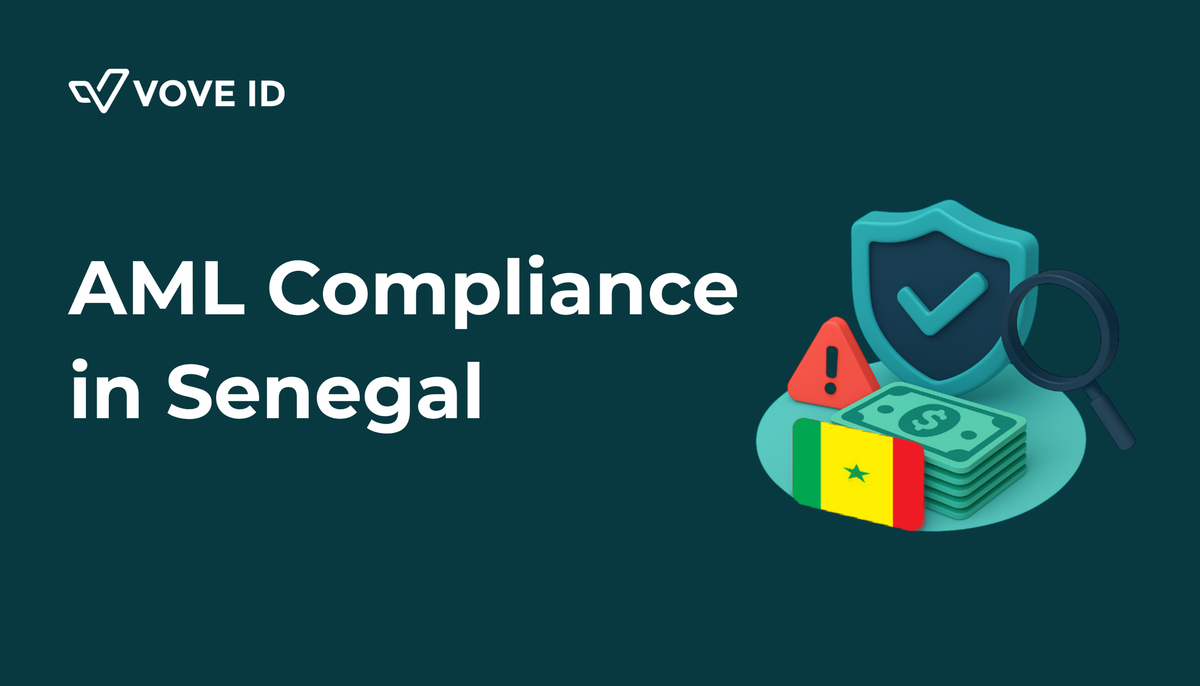
Senegal's fintech ecosystem — digital wallets, BNPL platforms, micro-lending apps, remittance services — keeps expanding, and regulatory scrutiny has grown right alongside it. For early-stage startups, credible AML compliance is what unlocks banking partnerships and investor confidence, not just a regulatory formality. VOVE ID helps fintechs and startups in Senegal build audit-ready AML workflows from day one.
This guide covers AML obligations for regulated entities in Senegal. For the underlying compliance framework, see our AML Requirements Explained 2026.
Senegal's AML Regulatory Framework
- Law No. 2024-08 (14 February 2024) is Senegal's current AML/CFT/CPF law, replacing the earlier 2018 framework. It expands reporting obligations to fintechs, payment service providers, virtual-asset service providers, and real estate intermediaries, and sets penalties for serious violations.
- CENTIF: Senegal's Financial Intelligence Unit, receiving, analyzing, and disseminating suspicious transaction reports.
- BCEAO: issues binding regional directives for all UMOA member states, including Instruction No. 001-01-2024 on payment services and Instruction No. 001-03-2025 on AML governance and internal control.
- CDP (Commission de Protection des Données Personnelles): Senegal's data protection authority; biometric and certain cross-border data processing may require prior authorization beyond a standard declaration.
For customer due diligence requirements for individuals, see our KYC guide for Senegal. For business verification and beneficial ownership requirements, see our KYB guide for Senegal.
Senegal and the FATF Grey List
Senegal was removed from FATF's list of jurisdictions under increased monitoring in October 2024, and remains off it as of the 19 June 2026 FATF statement. That's a genuine milestone, but it doesn't reduce the underlying obligation: firms still need to apply the domestic risk-based framework and enhanced measures wherever their own risk assessment calls for it.
AML Compliance in Practice
Customer Due Diligence (CDD):
- Collect and verify identity documents: national ID card (CNI), passport, driver's license, or voter card.
- Screen against sanctions lists (UN and other applicable designations) and PEP databases.
- Apply Enhanced Due Diligence to high-risk clients or cross-border relationships.
Transaction monitoring:
- Implement systems calibrated to detect unusual patterns or suspicious behavior.
- Maintain records for at least 10 years — for both identity/profile records (from account closure or relationship end) and transaction records (from the transaction date).
Reporting:
- Submit STRs to CENTIF immediately once suspicion forms; supplementary information is sent without delay.
- Non-compliance risks significant fines, license revocation, and reputational damage.
Challenges for Fintechs
- High cash usage: a large share of transactions in Senegal remain cash-based, which weakens the audit trail and increases the importance of automated monitoring.
- Uneven ID coverage in some rural areas, which makes digital verification tools useful rather than optional.
- Cross-border flows: digital remittances and foreign-owned entities add AML complexity.
- Resource constraints: early-stage startups often lack a dedicated compliance officer, making automation a practical necessity.
How VOVE ID Supports AML Compliance in Senegal
VOVE ID helps fintechs and digital businesses:
- Automate identity verification and AML screening.
- Screen against sanctions and PEP lists on an ongoing basis.
- Maintain audit-ready logs aligned with Senegal's AML framework.
For the complete, sourced requirement-by-requirement checklist, see VOVE ID's Senegal compliance checklist.
Conclusion
AML compliance in Senegal is a real differentiator, not just a box to check. With Law No. 2024-08 setting a clearer national baseline, active CENTIF and BCEAO supervision, and a grey-list exit still fresh, startups that build genuine AML discipline now are the ones positioned to scale across the UMOA region without a compliance rebuild later.
Senegal's grey-list exit raised the bar for credible compliance, not lowered it. VOVE ID helps fintechs verify customers, screen for risk, and keep audit-ready records that hold up to CENTIF and BCEAO review.
This article is intended for general informational purposes only and does not constitute legal, financial, or regulatory advice. KYC/KYB/AML requirements may vary depending on jurisdiction, industry, and specific business circumstances. For up-to-date and binding compliance obligations, readers should refer to the relevant regulatory authorities or consult qualified professionals.