How KYC Drives Egypt’s Financial Future in 2025
Egypt was never on the FATF grey list — but its KYC rules under Law 80/2002 are still detailed and actively supervised.
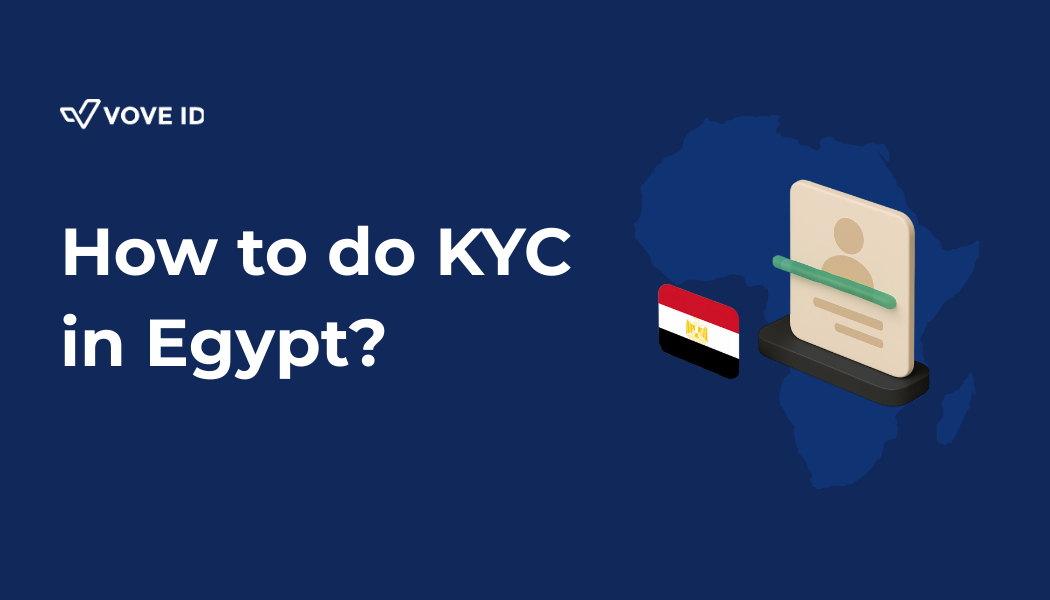
Egypt's fintech sector continues to grow, and its identity-verification rules are correspondingly detailed. VOVE ID helps regulated platforms build KYC around Egypt's specific documents and verification channels.
This guide covers Egypt-specific KYC requirements. For the underlying framework, see our KYC requirements explained.
Identity Documents and Verification
Egyptian KYC under Law No. 80 of 2002 and its Executive Regulations requires collecting a customer's full legal name, official identification details, date and place of birth, nationality, address, occupation, and contact details — verified against reliable independent evidence rather than accepted at face value. The National ID card, issued through Egypt's civil registry, is the primary identity document for citizens; passports serve foreign nationals and as a secondary document.
Anonymous or fictitious-name accounts are prohibited outright, and identity must be verified before the relationship or occasional transaction begins.
Representative Authority
Where someone acts on a customer's behalf, their identity and their authority to act both need independent verification — a mandate or equivalent authority record, not just an ID check on the representative themselves.
Understanding Purpose and Activity
Beyond identity, CBE-supervised institutions need to record the nature and purpose of the relationship, expected transaction volumes and counterparties, and source of funds — the profile that lets ongoing monitoring actually detect when something looks inconsistent with what the customer said at onboarding.
Enhanced Due Diligence
Higher-risk customers — PEPs in particular — require additional information collection, independent corroboration of identity and activity claims, documented source-of-wealth and source-of-funds analysis, and senior-management approval before the relationship starts or continues.
When CDD Fails
If required identity checks can't be completed, the relationship shouldn't open (or should be exited if already underway), and the institution needs to consider — and document — whether the circumstances warrant a suspicious-transaction report to EMLCU.
Technology and Digital Onboarding
The CBE supports electronic KYC channels, including document authenticity checks and biometric liveness verification, which has become standard for mobile wallets and digital banking products expanding beyond Cairo and Alexandria into markets with less consistent physical banking access.
Data Protection
Egypt's Personal Data Protection Law (151/2020), now overseen by the Personal Data Protection Center under a transition running through 1 November 2026, requires a documented lawful basis for processing identity and biometric data — separate from, and running alongside, AML recordkeeping duties.
Regulatory Context
Egypt was not named in FATF's 19 June 2026 increased-monitoring or call-for-action statements. It has never carried the grey-list pressure that some regional peers have faced, but CBE and FRA supervision of KYC compliance remains active and detailed regardless of FATF status.
For the complete source-linked implementation checklist — all 7 control areas and 45 evidence prompts — see VOVE ID's Egypt compliance checklist.
Final Thoughts
Egyptian KYC works because it's built around a small set of well-established identity documents and an increasingly digital verification layer on top of them.
VOVE ID supports document verification, biometric liveness checks, and screening as part of one connected onboarding workflow.
This article is intended for general informational purposes only and does not constitute legal, financial, or regulatory advice. KYC requirements may vary depending on jurisdiction, industry, and specific business circumstances. For up-to-date and binding compliance obligations, readers should refer to the relevant regulatory authorities or consult qualified professionals.