How KYC Is Driving South Africa’s Financial Future
Smart ID and Green Book verification sit at the center of South African KYC — here's what FICA due diligence actually requires.
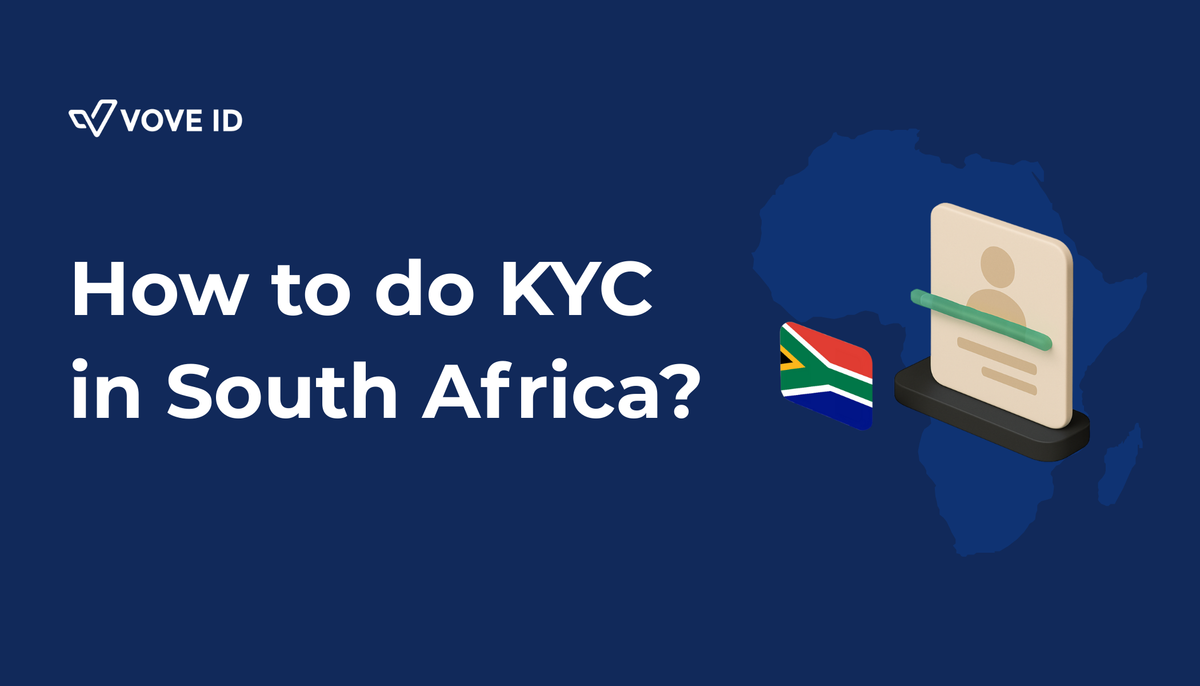
South Africa's financial sector is one of the continent's most mature, and its identity-verification expectations reflect that. VOVE ID helps regulated platforms build KYC around South Africa's specific documents and identity infrastructure.
This guide covers South Africa-specific KYC requirements. For the underlying framework, see our KYC requirements explained.
Identity Documents
South African KYC under FICA relies on a small set of accepted identity documents:
- Smart ID card — the current national identity document.
- Green Book (green barcoded ID book) — the older identity document, still valid and still in circulation, particularly outside major urban centers.
- Passport — for foreign nationals and as a secondary document.
Proof of address (a utility bill, lease agreement, or bank statement under three months old) is required alongside identity verification. Rural and informal-sector customers without a recent utility bill in their name often rely on affidavits or alternative corroborating evidence — a friction point worth designing around rather than treating as an edge case.
Core KYC Requirements
- Identity verification: document authenticity checks against the Smart ID or Green Book, ideally cross-referenced against Home Affairs data where that access exists.
- Enhanced due diligence: additional scrutiny, source-of-funds analysis, and senior approval for Politically Exposed Persons and higher-risk customers.
- Screening: sanctions, PEP, and FATF-list checks as part of onboarding, not a one-time gate.
- Ongoing monitoring: transaction review calibrated to FICA's reporting thresholds, not a static onboarding snapshot.
Why the Access Gap Matters
Formal identity-document coverage is not universal across South Africa, and that gap is concentrated in rural areas. Mobile and agent-assisted eKYC — biometric liveness checks paired with digital document capture — helps close it, but scaling it responsibly means building fallback paths for customers who can't complete a fully digital flow, not just optimizing for the median case.
Data Protection
The Protection of Personal Information Act (POPIA), 2013 requires explicit consent for collecting and processing identity, address, and biometric data, alongside the retention and access obligations that come with FICA recordkeeping. The two obligations run in parallel — POPIA doesn't override the AML recordkeeping duty, and vice versa.
Regulatory Context
FICA (2001, amended 2017) sets the core due-diligence obligations; the FIC oversees enforcement, and the FSCA regulates non-bank accountable institutions including most fintechs. South Africa's October 2025 exit from the FATF grey list reflects sustained reform rather than a relaxation of KYC expectations — supervisors have been explicit that continued vigilance, not complacency, is the expected posture heading into the next FATF mutual evaluation.
For the complete source-linked implementation checklist — all 7 control areas and 49 evidence prompts — see VOVE ID's South Africa compliance checklist.
Final Thoughts
South African KYC works because it's built around documents and verification channels that actually exist in the market — Smart ID, Green Book, and a growing eKYC layer bridging the access gap.
VOVE ID supports document verification, biometric liveness checks, and screening as part of one connected onboarding workflow.
This article is intended for general informational purposes only and does not constitute legal, financial, or regulatory advice. KYC requirements may vary depending on jurisdiction, industry, and specific business circumstances. For up-to-date and binding compliance obligations, readers should refer to the relevant regulatory authorities or consult qualified professionals.