KYC Compliance in Algeria: A Guide to Identity Verification & AML
Algeria's biometric National ID is central to KYC — but verifying it doesn't remove the sanctions and PEP screening steps around it.
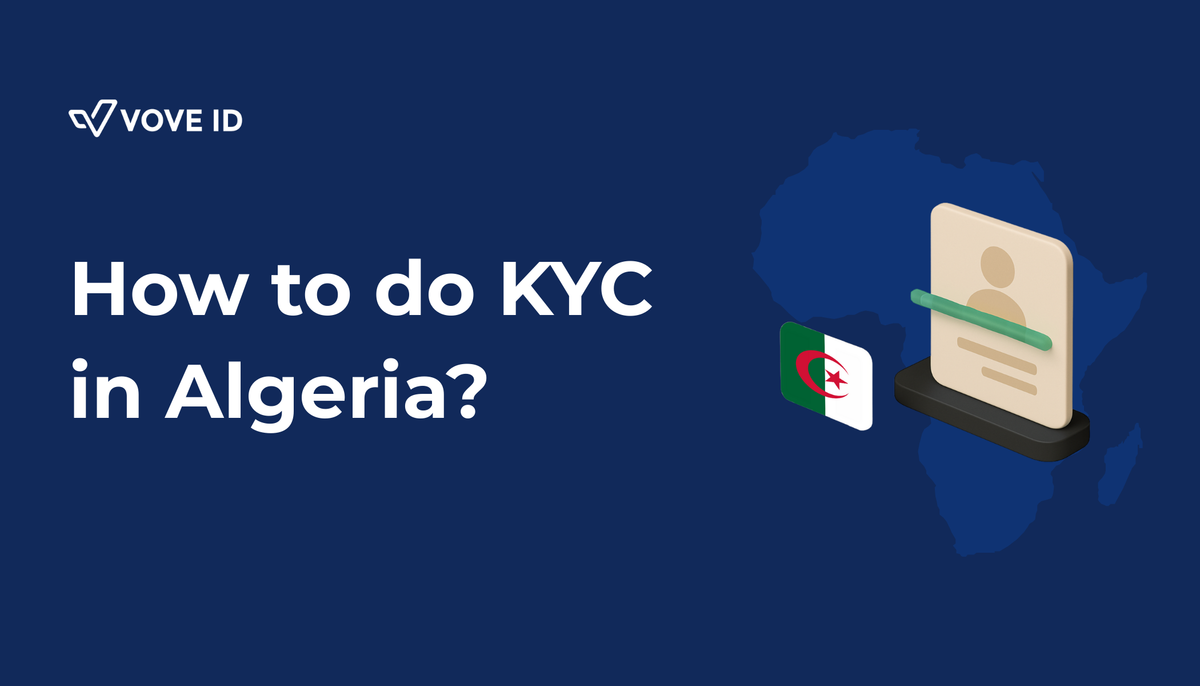
Know Your Customer (KYC) compliance in Algeria ensures individuals are who they claim to be before a financial relationship begins. It's shaped by local regulation, Banque d'Algérie standards, and a cash-based informal economy that makes registry-independent identity verification especially valuable. VOVE ID supports identity verification for regulated platforms operating in Algeria and across North Africa.
Regulatory Framework
Algeria's core AML/CFT law, Law No. 05-01 (2005), was substantially amended by Law No. 25-10 of 24 July 2025, which strengthened customer due diligence obligations and tied refresh cycles to documented risk. Banque d'Algérie enforces KYC standards for banks and financial institutions through Regulation No. 24-03 and Instruction No. 04-2026, and the Cellule de Traitement du Renseignement Financier (CTRF) is Algeria's financial intelligence unit.
Identity Verification
The National Identity Card (Carte Nationale d'Identité Biométrique) is Algeria's primary identity document, issued by the Ministry of Interior with biometric data built in — a genuine advantage for verification reliability compared with markets running on older, non-biometric documents. Passports serve as a secondary document, particularly for foreign nationals.
Beyond the document itself, CDD requires:
- Verifying address through utility bills or residency certificates.
- Screening against current UN sanctions lists and Algeria's national terrorist list.
- Assessing risk based on transaction pattern, source of funds, and geographic exposure.
For a full breakdown of identity verification requirements, see our KYC requirements explained.
Refresh Cycles
Under Instruction No. 04-2026, customer information review is risk-tiered: at least annually for high-risk customers, within three years for medium risk, and within five years for low risk. Non-face-to-face onboarding is treated as a risk factor in its own right — it doesn't reduce identification or verification duties, and needs its own document-integrity and liveness controls.
Enhanced Due Diligence
PEPs and other higher-risk customers require additional information collection, source-of-funds and source-of-wealth analysis, and approval from the legal person's decision-making body before the relationship starts or continues — plus enhanced ongoing monitoring for as long as the relationship lasts.
Record-Keeping
Retain identity and address records for at least five years after account closure or relationship end, accessible to CTRF on request.
Challenges in Algerian KYC
- Informal economy — a substantial share of transactions run cash-based, which limits the corroborating evidence a purely document-based check can rely on.
- Digital infrastructure gaps — access to fully digital verification channels is uneven outside major urban centers.
- Fraud pressure — biometric and liveness checks help counter identity fraud, but need regular updates to keep pace with new techniques.
For the complete source-linked implementation checklist — all 11 control areas and 41 evidence prompts — see VOVE ID's Algeria compliance checklist.
Final Thoughts
Algeria's biometric National ID gives KYC a stronger identity foundation than many regional markets have, but it's one input into a broader CDD chain — sanctions screening, risk-based refresh, and enhanced due diligence for higher-risk customers all still apply on top of it.
VOVE ID supports biometric identity verification and screening as part of one connected onboarding workflow.
This article is intended for general informational purposes only and does not constitute legal, financial, or regulatory advice. KYC requirements may vary depending on jurisdiction, industry, and specific business circumstances. For up-to-date and binding compliance obligations, readers should refer to the relevant regulatory authorities or consult qualified professionals.