KYC & KYB Compliance in Kenya 2026: A Practical Implementation Guide
Digital KYC and KYB in Kenya 2026: mobile-first onboarding, identity verification, and beneficial ownership checks with VOVE ID
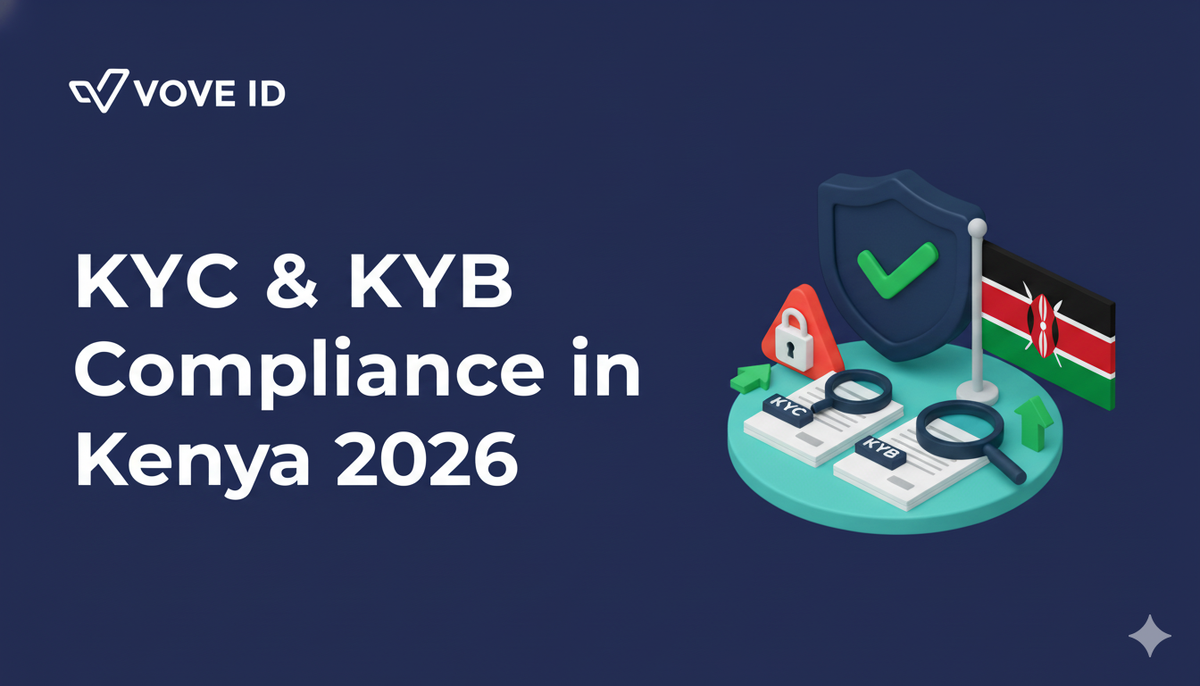
Kenya has one of the most advanced digital financial ecosystems in Africa, driven by mobile money adoption, banking infrastructure, and fast-growing fintech platforms. KYC and KYB processes are essential for onboarding customers securely while meeting regulatory requirements.
This guide focuses on how KYC and KYB are implemented in practice within Kenyan financial institutions and fintech platforms in 2026.
For broader frameworks, see:
 Anastasiia
Regulatory Context
Key regulatory frameworks in Kenya:
- CBK Guidelines on KYC and AML (2025–2026)
- Kenya Data Protection Act (2019)
- Beneficial Ownership Regulations under the Business Registration Service
- Mobile Money regulatory requirements for wallet providers
These frameworks define identity verification, data protection, and business onboarding requirements across financial services.
Regulatory focus is increasingly placed on:
- accuracy of customer identification
- completeness of beneficial ownership records
- effectiveness of onboarding and monitoring systems
Digital KYC & KYB Workflow in Kenya
1. Customer Onboarding (KYC)
- Submission of Kenyan National ID, Passport, or Alien ID
- Document capture and verification
- Biometric liveness check
- Sanctions and PEP screening
- Risk scoring and onboarding decision
Tiered KYC approach in Kenya
Financial institutions often apply tiered KYC depending on customer risk and transaction limits:
- Low-risk accounts: basic ID verification and limited transaction thresholds
- Standard accounts: full ID verification with biometric checks
- High-risk accounts: enhanced due diligence and additional manual review
This structure allows scalable onboarding while maintaining compliance with CBK expectations.
For more information read our KYC in Kenya guide.
2. Business Verification (KYB)
- Collection of company registration documents
- Identification of directors and shareholders
- Verification of Ultimate Beneficial Owners (UBOs)
- Cross-checking against official registries
Common KYB challenges in Kenya
- Incomplete or inconsistent company registry data
- Difficulties verifying beneficial ownership structures
- Informal or fast-changing business registrations
- Manual verification delays in high-volume onboarding
These challenges drive increasing adoption of automated KYB workflows in fintech environments.
For more information read our KYB in Kenya guide.
3. Account Activation
- Approval based on risk score
- Assignment of transaction limits
- Storage of verification records in line with regulatory requirements
Practical Compliance Checklist
- Verify government-issued identity documents
- Perform biometric liveness checks
- Conduct PEP and sanctions screening
- Collect and verify UBO information
- Apply risk-based onboarding rules
- Ensure compliance with Kenya Data Protection Act
- Store records according to regulatory retention requirements
- Monitor onboarding exceptions and manual reviews
Kenya-Specific Operational Factors
- Mobile money ecosystems (e.g. wallet-based onboarding flows)
- High reliance on agent-assisted onboarding channels
- Strong demand for automated onboarding systems in fintech
- Increasing focus on cross-border transaction monitoring
As onboarding volumes grow, manual verification processes often become a bottleneck, which increases demand for automated identity verification systems.
VOVE ID
VOVE ID enables Kenyan financial institutions and fintech platforms to automate KYC and KYB workflows through document verification, biometric checks, and business identity validation in a single system.
FAQ
1. Can KYC be completed fully digitally in Kenya?
Yes, provided identity verification and biometric checks are implemented.
2. What documents are required for KYB?
Company registration documents, director details, and beneficial ownership information.
3. Is mobile money onboarding regulated?
Yes, mobile wallet providers must comply with CBK KYC requirements.
4. Are biometric checks required?
They are widely used as part of strong customer authentication.
5. How long must records be stored?
Retention requirements are defined by CBK guidelines and data protection rules.