How Long Should KYC Take? Benchmarking Onboarding Speed in 2026
Teams keep asking for one KYC speed number. The real benchmark is three separate clocks, not a single average.
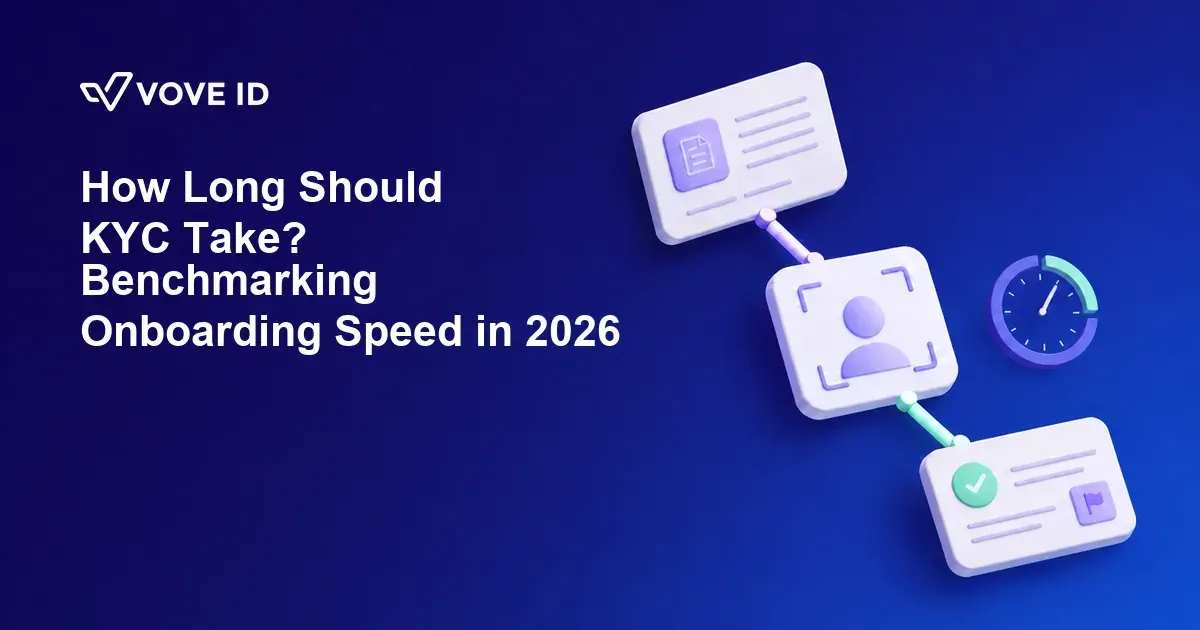
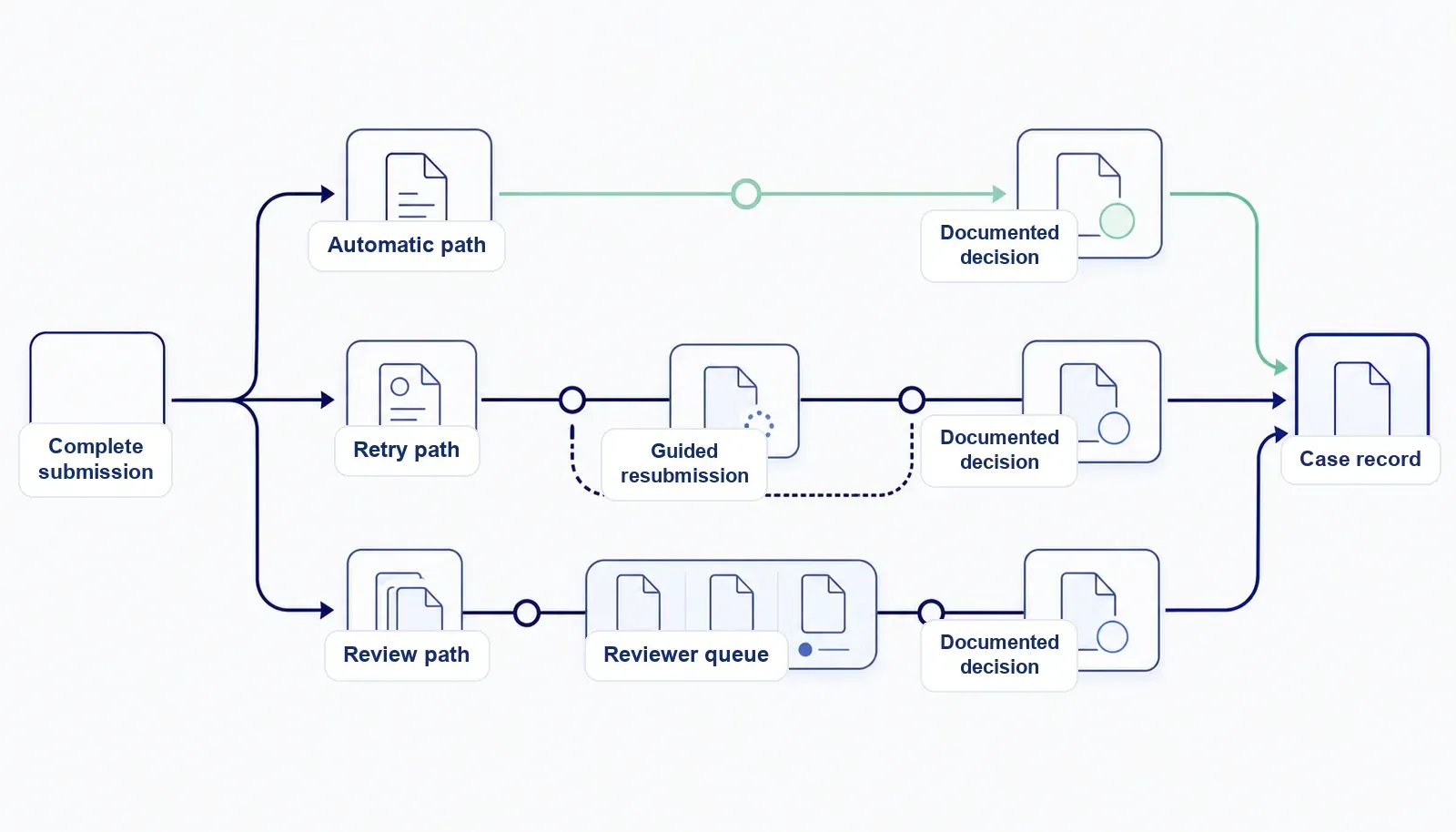
There is no defensible universal KYC duration. The useful benchmark is the time from a complete, valid submission to a documented decision — measured separately for the automatic path, retry path, and reviewed path.
VOVE ID helps compliance and product teams run identity workflows where onboarding speed has to remain traceable to the controls behind it.
Teams often ask for one number: how long should KYC take? That question hides whether a case is automatic, retried, or reviewed. This is exactly where teams mistake a front-end timer for an onboarding benchmark.
The right benchmark: complete submission to decision
Start the clock only when the user has supplied the evidence the workflow requires. Stop it when the workflow records a decision or moves the case into a defined review state.
Then segment the measure. A clean, complete submission is not comparable with a case that has a blurred document, a failed live capture, a name discrepancy, or a risk signal. Combining them makes both product performance and compliance operations harder to see.
EBA guidance calls for risk-sensitive onboarding and assessment of tool adequacy and reliability. Speed does not replace controls.
For the underlying identity-verification framework, see our KYC requirements explained.
Three clocks teams should measure: not one headline number
The automatic-path clock measures cases that arrive complete and meet the rules for an automated decision.
The retry clock measures the time added when a user must resubmit evidence. It exposes unclear instructions, weak capture conditions, or document-format friction.
The review clock measures the time from a case entering review to a documented outcome. It shows whether reviewers have the evidence, routing, and authority to close the case.
Publish or manage these as separate operational measures. A single average can look fast while hiding a growing exception queue.
A realistic onboarding delay: where the time actually goes
A payment app launches a remote KYC flow for a new market.
The first submission contains an ID photo with glare across a required field, a selfie capture that does not meet the live-capture requirement, and an address field that does not match the document format expected by the form.
The applicant retries twice. The case then enters a reviewer queue because the document image remains unclear.
If the team reports only "time to automated decision," it does not see this experience. Total elapsed time alone also hides whether the delay came from collection, retry guidance, policy, or review capacity.
This is not a latency problem. It is an evidence-routing problem.
How VOVE ID supports a measurable workflow
VOVE ID supports document verification, biometric liveness detection, and face matching within an identity workflow. It can help detect document-template inconsistencies, invalid MRZ checksums, barcode or QR inconsistencies, and image manipulation.
Those controls give teams useful decision points. They can keep clean cases moving through the intended path while routing incomplete or inconsistent evidence to the right retry or review process.
The goal is not to promise a universal completion time. It is to make the time spent in each step visible, explainable, and appropriate to the case risk.
Practical KYC-speed checklist
Onboarding
- Define when the benchmark clock starts and stops.
- Give users capture instructions before they submit evidence.
- Measure abandoned and retrying sessions separately from completed sessions.
Identity
- Record the document, liveness, and face-matching outcome behind each decision.
- Separate automatic decisions from cases that require human review.
- Provide a clear retry path for fixable evidence failures.
Risk
- Set escalation rules for inconsistencies and higher-risk cases.
- Avoid using speed targets to bypass required controls.
- Review whether a rule creates avoidable retries for a valid customer group.
Audit
- Preserve the reason a case moved between workflow states.
- Track reviewer handoffs and final decision reasons.
- Review the exception queue alongside the automatic-path measure.
Q&A
What is a good KYC onboarding time?
There is no universal figure that is meaningful across products and jurisdictions. Measure complete submissions, retries, and reviewed cases separately, then set targets that fit the risk and control design.
Should teams count user retry time in the benchmark?
Yes, but as its own measure. It shows where the collection experience or evidence requirements create avoidable friction.
Does faster KYC always mean better KYC?
No. A faster flow that loses evidence, suppresses escalation, or weakens review is not a better compliance process. The decision must remain traceable.
FAQ
Why do KYC cases take longer than a simple selfie capture?
The workflow may need to collect and assess document evidence, a live capture, a facial comparison, risk signals, and any required manual review. Each step should be visible rather than hidden in a headline average.
Can a team set different service targets by risk level?
Yes. A risk-sensitive workflow can use different routes and expectations, provided the rules are documented and applied consistently.
Conclusion
KYC speed is not a single number. It is a set of clocks that reveal how a workflow handles clean submissions, retries, and exceptions.
Teams should benchmark each path, preserve the evidence behind each decision, and treat the review queue as part of the customer journey. Collection, verification, and case management are one workflow.
Want to see how VOVE ID helps teams keep KYC decisions and exception routes in one workflow?
This article is intended for general informational purposes only and does not constitute legal, financial, or regulatory advice. KYC/KYB/AML requirements may vary depending on jurisdiction, industry, and specific business circumstances. For up-to-date and binding compliance obligations, readers should refer to the relevant regulatory authorities or consult qualified professionals.