VOVE ID vs IDnow for EU-Regulated Fintechs: A Buyer’s Evaluation Framework
A vendor feature list isn't a compliance decision. Here's how EU fintechs should actually evaluate an identity-verification provider.
EU-regulated onboarding is not a vendor certification exercise. It is a risk-sensitive operating model that a fintech must test against its own products, markets, and customer journeys.
VOVE ID helps fintech teams verify identity and run a reviewable onboarding workflow across different document types and customer journeys. The decision is harder in Europe because a team must connect its risk assessment, remote onboarding controls, local obligations, and product experience without assuming one provider makes the whole system compliant.
IDnow's public materials describe several identity-verification routes, including AutoIdent, VideoIdent, eID, and eSign integrations. Its public trust-services materials also describe qualified electronic-signature and eIDAS-related offerings. Those are meaningful capabilities to evaluate, but they do not replace a fintech's own assessment of the process it must operate.
This is exactly where compliance teams lose the thread between a provider feature and a defensible decision.
EU remote onboarding: technology does not choose the policy
The European Banking Authority's remote customer onboarding guidelines set expectations for safe and effective remote onboarding in line with AML/CFT and data-protection obligations. They are technologically neutral. This means one thing: a team must assess whether its chosen solution, controls, and procedures are suitable for its own risk exposure.
That changes the buyer conversation. The first question is not whether a provider offers an eID, video, automated, or signature-related route. The first question is which route matches the fintech's regulated activity, country footprint, acceptance policy, and exception process.
IDnow's developer hub publishes API and SDK materials for its product families and supported documents. A fintech should use that public material to define a pilot, then verify the exact route, jurisdiction, document set, and operational evidence required for its launch.
For the underlying framework, see our KYC requirements explained.
The buyer's framework: prove assurance, not labels
An EU buyer should compare evidence across five areas. Each one exposes a different failure point that a headline feature list can hide.
| Evaluation area | Evidence to request in a pilot | Decision the team needs to make |
|---|---|---|
| Assurance route | A documented path for the intended remote identity journey | Which route satisfies the team's policy and local obligations? |
| Document and market fit | Results for the exact documents and countries in scope | Which evidence is usable for each customer segment? |
| Integration pattern | A working web, mobile, hosted, or embedded journey | How do product states and evidence enter the platform? |
| Exception operations | A completed failed, pending, and escalated case | Who owns the exception and what can they approve? |
| Auditability | A retrievable decision record with evidence and rationale | Can the fintech explain the decision to an auditor or supervisor? |
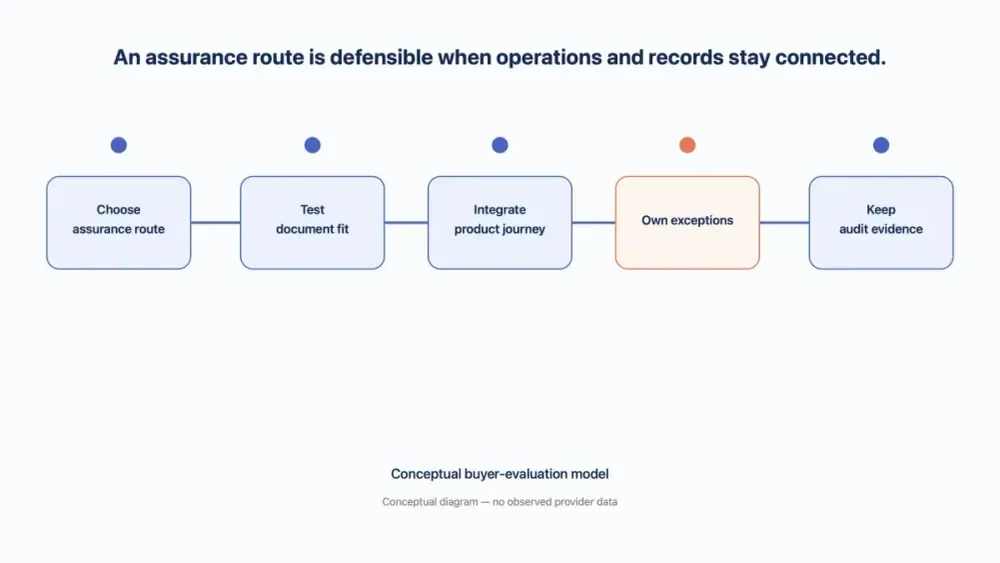
An EU onboarding route is defensible only when the assurance choice, operating controls, and decision record stay connected.
The matrix does not rank IDnow or VOVE ID. It gives a fintech a way to convert public product information into its own controlled evidence pack.
A realistic scenario: a payments fintech expands across the EU
A payments fintech adds a new EU customer segment. Product wants a single digital application. Compliance needs a process that can handle different documents, customer risk levels, and additional-evidence requests without creating an unowned queue.
The team receives:
- A national ID from a customer in a launch country
- A passport and residence document from a cross-border customer
- A case that needs a different assurance route under the fintech's policy
- A pending result that must be communicated to the product
- A reviewer disposition that needs a complete record
Then the operating questions appear.
Can the policy explain why the chosen route was appropriate? Does the application request more evidence at the right time? Can the reviewer see the necessary evidence and leave a rationale? Can the team retrieve the final record later?
This is not an integration failure. It is an assurance-and-ownership failure.
How VOVE ID fits: make the decision path reviewable
VOVE ID is relevant when a fintech needs identity verification, biometric liveness detection, face matching, sanctions screening, KYB workflows, and audit-ready logging in its operating flow, with document verification across 190+ countries (exact figure to confirm with the team).
The practical value is not a generic compliance claim. It is the ability to test an identity flow against the specific evidence, decision points, and review ownership that a fintech has documented for its launch.
For a multi-market EU flow, teams should pilot the documents and language conditions they expect, define their review policy before customers arrive, and confirm that the outcome of each case is available to product, operations, and audit teams.
Practical EU-fintech KYC checklist
Policy and assurance
- Map each remote onboarding route to a documented risk and acceptance policy.
- Confirm country-specific obligations with qualified legal and compliance advisers.
- Define when a route needs additional evidence or a human decision.
Product and integration
- Test the exact web and mobile journeys used by the launch segment.
- Make pending, further-evidence, and rejected states explicit in product messaging.
- Record the system event that closes each identity case.
Operations and audit
- Assign an owner for every exception and escalation.
- Require reviewer rationale for manual dispositions.
- Test retrieval of case evidence and final decision records before launch.
FAQ
Does an eIDAS-related capability make a fintech compliant?
No. A capability can be relevant to a particular assurance route, but the fintech remains responsible for assessing its own remote onboarding process, risk exposure, and applicable obligations.
What should an IDnow evaluation include?
Use IDnow's public documentation to identify the product routes and integration patterns to examine, then validate the exact journey, documents, jurisdictions, and exception process in a controlled pilot.
When is VOVE ID a relevant option for an EU fintech?
It's a fit when a team needs identity verification, liveness, face-matching, sanctions screening, KYB, and audit-log capabilities and wants to pilot them inside a reviewable EU onboarding workflow, before that pilot decides a wider rollout.
Conclusion
VOVE ID versus IDnow is not a question of who holds the most labels. It is a question of whether a fintech can evidence the right assurance route and operate the resulting exceptions.
EU remote onboarding needs a connected system: policy, identity evidence, product states, human review, and audit records. Those are not separate features. They are one operating model.
Want to test VOVE ID against your EU launch workflow and review controls?
This article is intended for general informational purposes only and does not constitute legal, financial, or regulatory advice. KYC/KYB/AML requirements may vary depending on jurisdiction, industry, and specific business circumstances. For up-to-date and binding compliance obligations, readers should refer to the relevant regulatory authorities or consult qualified professionals.