Idempotency in KYC APIs: Why Retry Logic Can Silently Duplicate Cases
A retry isn't automatically safe. Here's how to keep a network timeout from silently opening a second verification case for the same applicant.
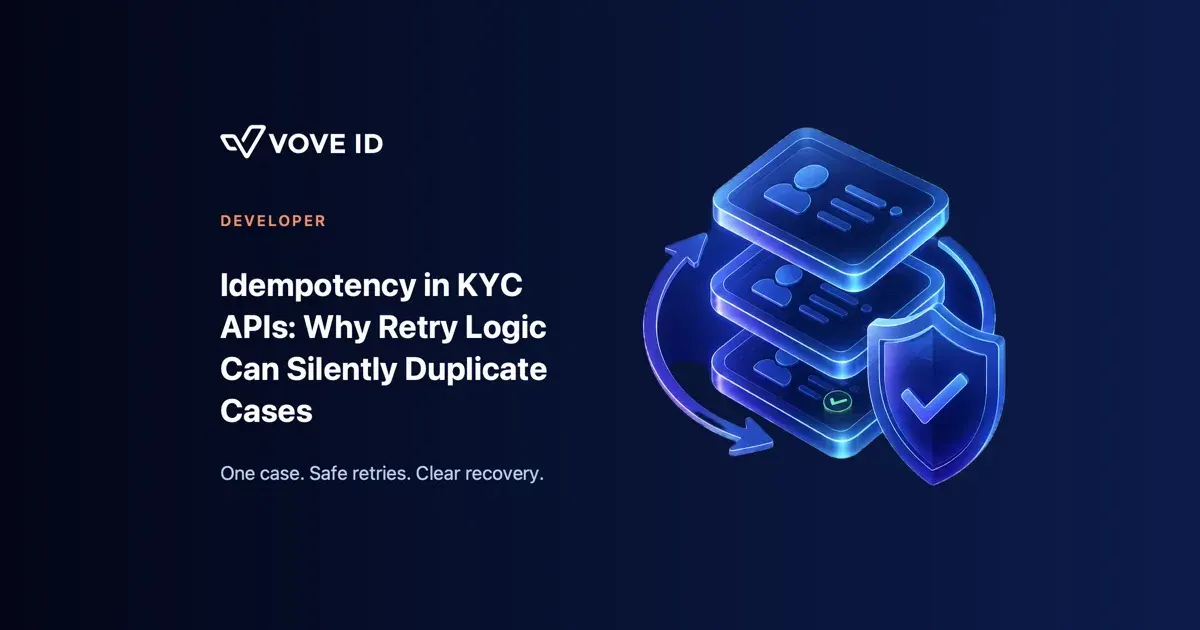
A retry is not automatically safe. KYC teams need a clear way to distinguish a recovered request from a second verification case.
Direct answer: KYC API idempotency means a repeated request produces one intended business action rather than multiple cases, charges, or review queues. Teams should confirm the provider's documented behavior before designing retries, then retain a request-level audit trail that lets operations reconcile every attempt.
VOVE ID helps fintech teams run identity verification in regulated onboarding flows. A network timeout can leave an application looking unfinished even after a request reached an external service. When an app retries without a defined recovery pattern, the same applicant can enter the workflow twice.
Engineering and compliance lose a shared view of the case at exactly this point — when a retry is treated as a fresh start instead of a recovery attempt.
Retry logic: why a technical detail becomes an operations problem
A mobile app cannot tell the difference between a request that never left the device and a request that completed after the connection dropped. The API response is missing in both cases.
On paper, the answer is simple: retry. In practice, that retry can create two verification sessions, two document collections, or two manual-review records if the receiving system treats each request as new.
This means one thing: the system needs a stable business reference before it needs a faster retry.
The case record: one applicant, one traceable decision
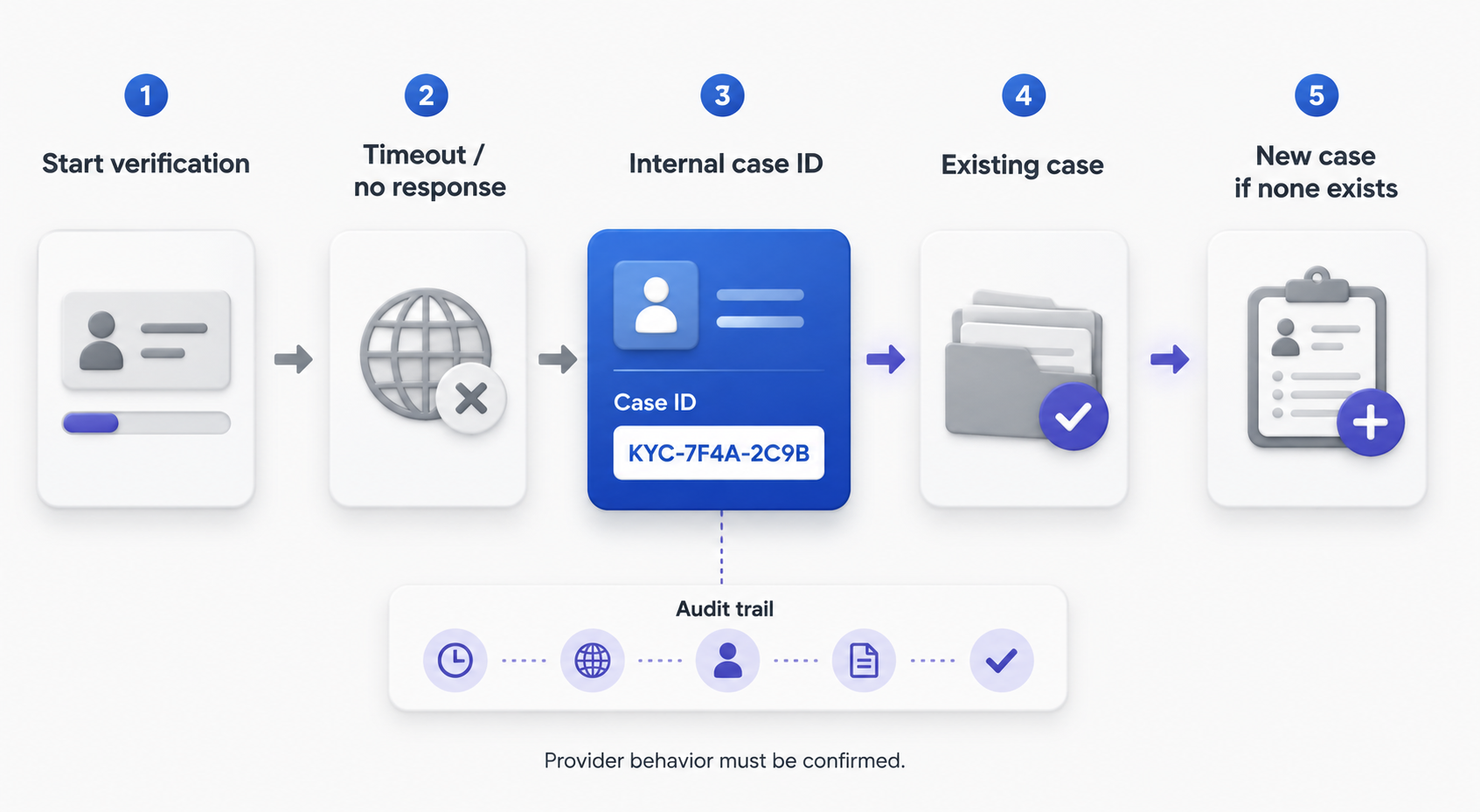
Each onboarding attempt should start with an internal case ID that remains attached to the applicant through document collection, liveness checks, review, and final decision. That internal ID belongs to the fintech, not to a single browser session or network call.
Store the attempted action, timestamp, actor, and response state beside that ID. A support or compliance reviewer can then see whether the applicant retried, whether a reviewer opened a case, and which decision the product should display.
Do not assume a provider supports a particular idempotency header, key format, or replay rule unless its current documentation confirms it. The integration contract determines how the client should safely recover.
A realistic failure: the applicant who appears twice
A lending app receives an application from a returning borrower during a weak mobile connection.
The application sends a verification-start request. The connection drops before the app receives a response, so the borrower taps "Try again." The app submits the same payload a second time with a newly generated session reference.
Then the inconsistency appears. Operations sees two open review records, the borrower receives two document requests, and the lending flow cannot tell which record controls disbursement.
The root problem is not that the borrower retried. It is that the product had no recovery rule connecting both attempts to one business case.
Recovery design: decide before the retry happens
Start with a client-side state model. A request is pending, confirmed, failed, or needs reconciliation. "No response" is not the same as "failed."
When the response is uncertain, query or reconcile against the internal case record before starting another workflow. If the provider exposes a documented lookup or safe retry mechanism, use that documented path. If it does not, route the state for operational reconciliation instead of guessing.
Use a narrow retry budget. Repeated automatic retries can amplify a transient failure into a queue of duplicate work.
A related failure mode shows up on the delivery side rather than the request side — see our webhooks vs polling for how a redelivered webhook event needs the same kind of idempotent handling.
How VOVE ID fits into an integration review
Identity verification is only one part of a controlled onboarding case. Teams can use VOVE ID for document OCR, biometric liveness detection, face matching, and audit-ready verification workflows while keeping their own case identifier and decision history as the system of record.
Before launch, confirm the current API contract with the product team: how a verification is initiated, what identifiers are returned, how status is retrieved, and what retry behavior is supported. Do not turn this guide into an implementation guarantee until those answers are approved.
For the wider identity-verification framework, see our KYC requirements explained.
Practical KYC retry checklist
Engineering
- Create one internal case ID before sending the first verification request.
- Persist request state and timestamps with the business case.
- Treat timeouts as uncertain outcomes, not automatic failures.
Operations
- Reconcile duplicate-looking attempts against the internal case ID.
- Define which case controls the customer-facing decision.
- Escalate ambiguous records before a regulated action proceeds.
Product review
- Confirm provider-supported retry and lookup behavior.
- Document any idempotency mechanism before exposing it in product copy.
- Test recovery paths with simulated timeouts and abandoned sessions.
FAQ
What does idempotency mean in a KYC API?
It means a repeated request should map to one intended business action, according to the API's documented contract. Teams must not assume the mechanism or its scope without provider confirmation.
Why do KYC retries create duplicate cases?
A timeout can hide a completed request. If the client creates a new case for every retry, the same applicant can enter more than one workflow.
Should an app retry a failed verification request automatically?
Only after the team defines how an uncertain outcome is reconciled. A safe recovery path checks the existing case before it begins another one.
What should compliance teams retain for a retry?
They need a traceable case ID, request timestamps, status changes, and the final decision. That record makes duplicate-looking events explainable during review.
Conclusion
KYC retry logic isn't just a transport concern — it's a case-management concern.
Teams need one identity-verification case that survives timeouts, retries, and review handoffs. The provider-specific contract should then be confirmed before the integration promises any particular recovery behavior.
Want to see how VOVE ID can fit into a controlled identity-verification workflow? Start with an integration review before you launch.
This article is intended for general informational purposes only and does not constitute legal, financial, or regulatory advice. KYC/KYB/AML requirements may vary depending on jurisdiction, industry, and specific business circumstances. For up-to-date and binding compliance obligations, readers should refer to the relevant regulatory authorities or consult qualified professionals.