Versioning Your KYC Integration: How to Upgrade Without Breaking Production
An upgrade that passes a happy-path test can still break production. Here's how to version a KYC integration as a controlled change, not a library bump.
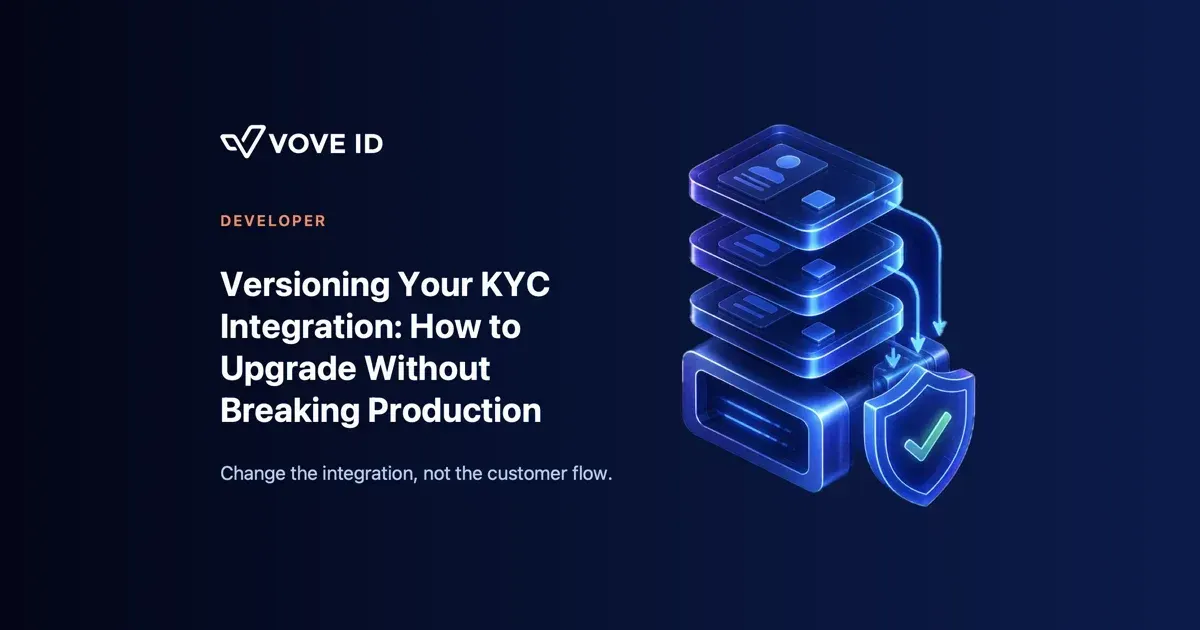
A KYC integration stays reliable when teams treat an upgrade as a controlled operational change, not a library update.
Direct answer: KYC API versioning is the discipline of changing an integration while protecting existing customer flows, decision records, and operational handoffs. Teams need an inventory of live dependencies, a tested rollback plan, and written confirmation of the provider's current change and support policy.
VOVE ID helps fintech teams build identity-verification workflows that include document OCR, biometric liveness detection, and face matching. Those workflows sit inside a broader product: onboarding screens, case management, support procedures, and release controls.
An unplanned upgrade turns into a production incident at exactly this point — where a change ships to one endpoint but the case record depends on several.
This is a different moment in the integration lifecycle than a first-time environment cutover — for that, see our sandbox to production migration checklist. Versioning covers an already-live integration changing under an established production workload.
The real integration surface: more than one endpoint
An API change can affect request fields, response states, SDK behavior, redirect flows, webhook payloads, or the way a team interprets a result. Even if one endpoint continues to respond, a downstream rule or dashboard can still break.
On paper, versioning belongs to engineering. In practice, it reaches product, compliance, support, and operations because each team relies on the verification result in a different way.
This means one thing: an upgrade needs an owner for the full case flow, not just the API client.
Change inventory: find every dependency before release
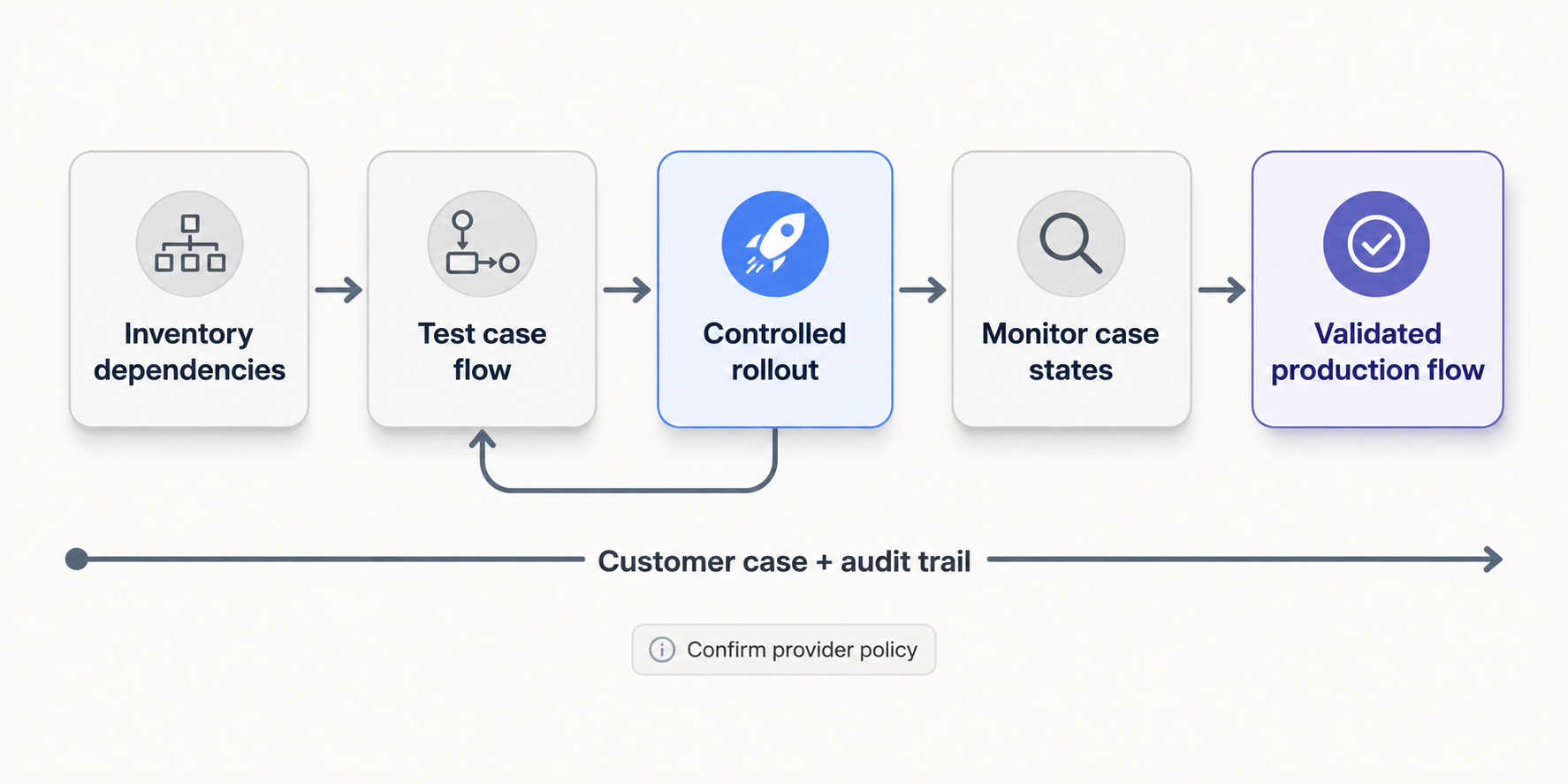
Map the customer journey from verification start to final decision. Record the app version, integration component, event consumer, internal case fields, review queue, and customer-facing status that rely on the existing behavior.
Then identify the contracts the team owns. A typed adapter, a response-mapping layer, and a versioned event schema give the product one controlled boundary instead of spreading provider details across the codebase.
Do not assume a provider's version identifiers, deprecation schedule, migration path, or support window unless its current documentation confirms them. Those details are product-specific and must be reviewed before they become public guidance.
A realistic failure: the release that changes a decision state
A marketplace updates its verification integration before a campaign launch.
The engineering team confirms that the test flow completes. But a production worker still expects an older response state, so it labels completed applications as pending. Support agents ask applicants to upload documents again while compliance reviewers see an incomplete case history.
The integration did not simply "break." The release changed a contract that multiple teams used without a shared migration plan.
Release control: stage the change around the case
Start in a non-production environment using representative but non-sensitive test cases. Compare the old and proposed integration at the boundaries the product owns: input validation, status mapping, decision rules, audit events, and customer messaging.
Roll out gradually only when the case record remains explainable. Monitor the outcomes that show operational health: unexpected states, reviewer escalations, duplicate cases, and support contacts. Keep a documented rollback path that returns the product to the previously validated behavior.
Version the team's own adapter and event contracts even where the provider does not use the same terminology. That keeps a provider change from immediately becoming a customer-flow change.
How VOVE ID fits into a controlled integration review
The right goal is not to promise zero-change releases. It is to make each change inspectable before it reaches a regulated decision.
Teams using VOVE ID should confirm the current product documentation with the product team before relying on any version, migration, or deprecation behavior. Their internal case record, response mapping, and audit logs should remain under their own release controls.
For the wider identity-verification framework, see our KYC requirements explained.
Practical KYC integration upgrade checklist
Engineering
- Inventory every service that consumes a verification result.
- Isolate provider-specific mappings behind a versioned adapter.
- Test unknown and changed response states before release.
Product and operations
- Define the customer message for interrupted or pending cases.
- Compare review-queue behavior before and after the change.
- Keep a rollback path for the whole onboarding flow.
Product review
- Confirm the provider's current versioning and support policy.
- Approve public statements about migration or deprecation behavior.
- Record the validated integration configuration and release date.
FAQ
What is KYC API versioning?
It is the practice of managing changes to an identity-verification integration without breaking the customer case, decision logic, or audit record. The exact provider mechanism varies and needs documentation.
Why can a KYC upgrade affect compliance operations?
Result states and case events often drive reviewer queues, customer messages, and final decisions. A small mapping change can therefore affect the operational record.
What should teams test before a production KYC upgrade?
Test the full customer flow, response mapping, decision rules, internal events, manual-review handoffs, and rollback. Use representative non-sensitive cases rather than only a happy-path request.
Should a team publish a provider's deprecation schedule in a blog post?
Only when the current policy is confirmed and approved. Unsupported dates or migration promises create the same confusion the article warns against.
Conclusion
KYC integration versioning isn't a release-note exercise — it's a controlled change to a customer case and its compliance record.
Teams need a clear integration boundary, an end-to-end test plan, and an approved view of the provider contract. That is how an upgrade remains a planned operating event instead of an onboarding failure.
Want to see how VOVE ID can fit into a controlled identity-verification workflow? Review the integration contract with your team before production release.
This article is intended for general informational purposes only and does not constitute legal, financial, or regulatory advice. KYC/KYB/AML requirements may vary depending on jurisdiction, industry, and specific business circumstances. For up-to-date and binding compliance obligations, readers should refer to the relevant regulatory authorities or consult qualified professionals.